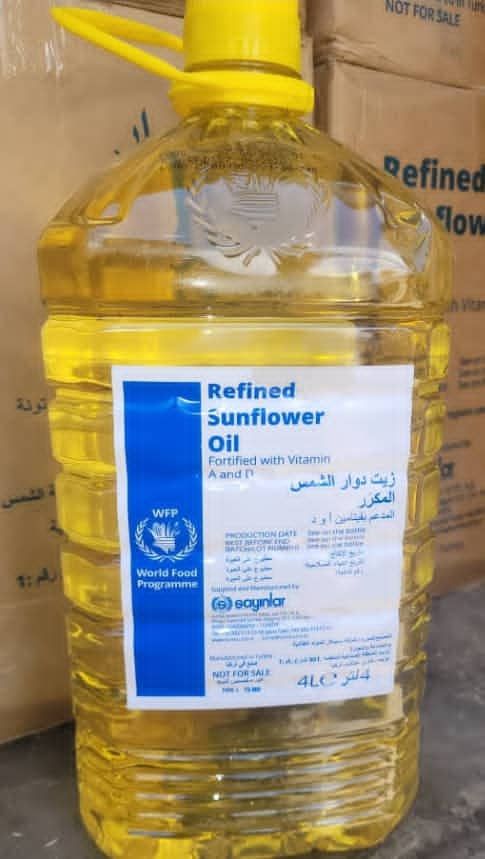
What is World Food Programme Refined Sunflower Oil?
This product is a staple cooking oil, specifically refined sunflower oil, distributed by the World Food Programme. It's designed as an accessible, shelf-stable cooking fat, primarily for humanitarian aid contexts, but also available more broadly. Unlike some specialty oils, it's a general-purpose culinary ingredient used for frying, baking, and dressing, and is notable for its fortification with essential vitamins, aiming to enhance nutritional intake in populations that might have dietary deficiencies.
The ingredient breakdown
The World Food Programme Refined Sunflower Oil features a remarkably simple ingredient list, consisting primarily of refined sunflower oil, enhanced by two crucial vitamins. This minimalist approach means it avoids many common additives, artificial colors, and synthetic preservatives often found in other processed food items. Its composition reflects a focus on providing essential calories and micronutrients without unnecessary complexity.
The primary component is Refined Sunflower Oil. This oil is extracted from sunflower seeds and undergoes a multi-step refining process, including degumming, neutralization, bleaching, and deodorization. This processing removes impurities, free fatty acids, and pigments, yielding a neutral-flavored, light-colored oil with a high smoke point, suitable for diverse cooking applications. While refining enhances shelf stability and usability, it also reduces some naturally occurring beneficial compounds. Regulatory bodies like the FDA generally recognize refined sunflower oil as safe for consumption, though its omega-6 fatty acid profile is a dietary consideration.
A key feature of this oil is its fortification with Vitamin A and Vitamin D. Vitamin A, a fat-soluble nutrient, is essential for healthy vision, immune system function, and cell growth. Its inclusion helps combat deficiencies, especially in areas where diverse diets may be scarce. Vitamin D, also fat-soluble, is critical for bone health, facilitating calcium and phosphate absorption, and supports immune regulation. These vitamins are added in safe, bioavailable forms, aligning with global health recommendations from organizations like the World Health Organization (WHO) to address micronutrient malnutrition.
What this means for your health
For most healthy adults, using World Food Programme Refined Sunflower Oil as intended within a balanced diet poses minimal health risks. The absence of artificial additives, colors, and synthetic preservatives means consumers avoid exposure to compounds that frequently raise concerns in other processed foods. The primary consideration stems from its nature as a refined oil: it is calorie-dense, providing nine calories per gram, similar to all fats. Therefore, moderation is key to prevent excessive calorie intake, which could contribute to weight gain if not balanced with physical activity.
Populations who might benefit most from this product are those at risk of Vitamin A and D deficiencies, given its fortification. However, individuals with specific dietary needs or health conditions, such as those managing cardiovascular health, might want to consider their overall intake of omega-6 fatty acids, which are prevalent in sunflower oil. While essential, an imbalance with omega-3s can be a concern. Pregnant women and children can generally consume this oil safely, benefiting from the added vitamins, provided it's part of a varied and nutritious diet and consumed in appropriate portions.
Safer alternatives to consider
When seeking alternatives to refined sunflower oil, consumers might look for options that offer a different fatty acid profile or less processing. For cooking, consider oils like extra virgin olive oil, which is minimally processed and rich in monounsaturated fats and antioxidants, or avocado oil, known for its high smoke point and healthy fats. For specific nutritional benefits, some unrefined oils like flaxseed oil offer higher omega-3 content, though they are not suitable for high-heat cooking. Prioritizing oils with clear sourcing, minimal processing, and a balanced fatty acid composition can be a good strategy.
The bottom line
The World Food Programme Refined Sunflower Oil offers a generally positive profile, primarily due to its fortification with essential vitamins A and D and its lack of artificial additives. While it is a refined product, a common trait of many cooking oils, its nutritional enhancements are a clear benefit. For the average consumer, it serves as a safe and versatile cooking oil. The practical takeaway is to use it in moderation within a balanced diet, appreciating its added nutritional value while being mindful of its calorie density.