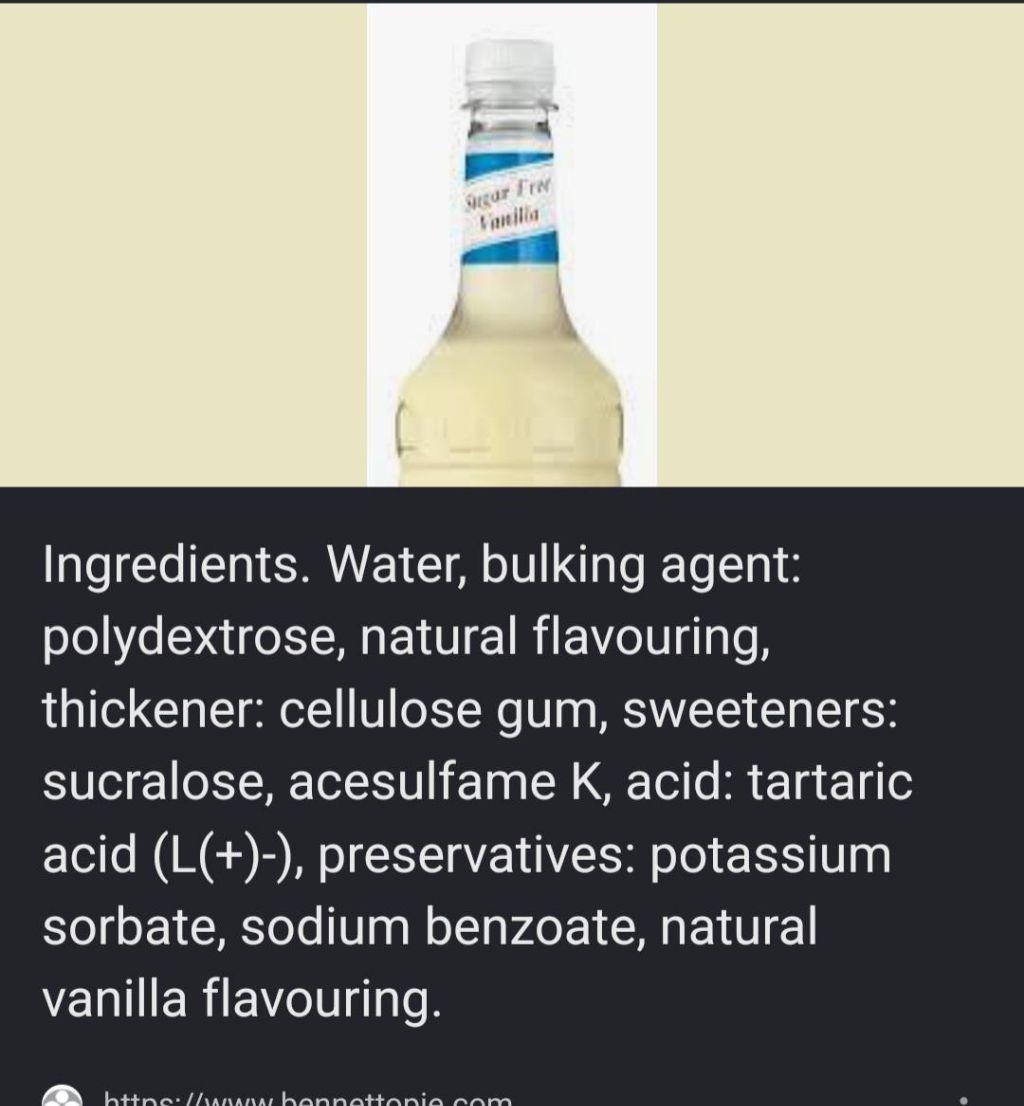
What is Sugar Free Vanilla Syrup?
Sugar Free Vanilla Syrup is a popular food additive designed to impart a sweet, vanilla flavor to beverages like coffee, tea, and cocktails without adding sugar or significant calories. It falls into the category of highly processed, non-nutritive flavorings, primarily marketed to individuals managing sugar intake, such as those with diabetes or those following low-carbohydrate diets. Unlike traditional syrups that rely on sugar for sweetness, this product uses artificial sweeteners and bulking agents to achieve its desired taste and texture.
The ingredient breakdown
This Sugar Free Vanilla Syrup features a relatively simple ingredient list, predominantly composed of water, artificial sweeteners, and various food additives. It is designed for flavor without nutritional contribution, reflecting a highly processed profile common in sugar-free products. The formulation focuses on achieving taste and shelf stability through synthetic compounds and bulking agents.
The primary sweetening agents in this syrup are Sucralose and Acesulfame K. Sucralose, an artificial sweetener derived from sugar, is significantly sweeter than sugar and is generally recognized as safe (GRAS) by the FDA for general purpose use. However, some emerging research suggests potential impacts on the gut microbiome and glucose metabolism, though these findings are not conclusive across all studies. Acesulfame K, another artificial sweetener, is also FDA-approved and widely used, often in combination with other sweeteners to create a more sugar-like taste profile. Both are non-caloric and pass through the body largely unabsorbed.
To ensure product stability and prevent microbial growth, this syrup contains Potassium sorbate and Sodium benzoate. Potassium sorbate is a common food preservative that inhibits mold and yeast. It is considered safe by regulatory bodies like the FDA. Sodium benzoate, another synthetic preservative, is also widely used and FDA-approved. A notable concern with sodium benzoate is its potential to form trace amounts of benzene, a known carcinogen, when combined with ascorbic acid (Vitamin C) in certain conditions. While this syrup does not list ascorbic acid, the presence of sodium benzoate is a point of consideration for some consumers.
The syrup's texture and body are enhanced by ingredients like Polydextrose and Cellulose gum. Polydextrose is a synthetic polymer of glucose, often used as a bulking agent and dietary fiber in low-calorie foods. It is generally well-tolerated and considered safe by the FDA. Cellulose gum, or carboxymethylcellulose, is a plant-derived thickener and stabilizer that prevents ingredients from separating and contributes to a smooth mouthfeel. Both are common and approved food additives, primarily serving functional roles in the product's consistency.
What this means for your health
For most healthy adults consuming Sugar Free Vanilla Syrup in moderation, the realistic exposure risk to its synthetic ingredients is generally considered low. The artificial sweeteners, sucralose and acesulfame K, are approved by major regulatory bodies like the FDA and EFSA, suggesting their safety within established acceptable daily intake levels. However, individuals with sensitive digestive systems might experience mild gastrointestinal discomfort from bulking agents like polydextrose if consumed in large quantities.
While the ingredients are approved, those who are pregnant, breastfeeding, or have specific health conditions, particularly gut-related issues, may wish to exercise extra caution or discuss consumption with a healthcare provider. The highly processed nature of the syrup means it offers no nutritional benefits, and relying heavily on such products might displace more nutrient-dense food choices. The presence of sodium benzoate, while generally safe, is a consideration for those minimizing exposure to synthetic preservatives.
Safer alternatives to consider
When seeking safer alternatives to highly processed sugar-free syrups, consider options that use natural sweeteners like stevia leaf extract or monk fruit extract, ideally without additional artificial sweeteners. Look for products with a shorter, more recognizable ingredient list, prioritizing natural flavorings over synthetic ones. Some consumers might opt for homemade syrups using whole ingredients and natural extracts, allowing for complete control over sugar content and additives. Prioritizing products with minimal preservatives or those using naturally derived preservatives can also be a beneficial approach for those looking to reduce their intake of synthetic compounds.
The bottom line
Sugar Free Vanilla Syrup effectively delivers a sugar-free, low-calorie vanilla flavor, which is its primary benefit for those managing sugar intake. However, its highly processed nature and reliance on artificial sweeteners and synthetic preservatives mean it offers no nutritional value. While generally considered safe for moderate consumption by healthy adults, individuals seeking to minimize their intake of synthetic additives or those with specific sensitivities might prefer to explore alternatives. For the average consumer, occasional use is unlikely to pose significant health risks, but it should not be considered a health-promoting food.