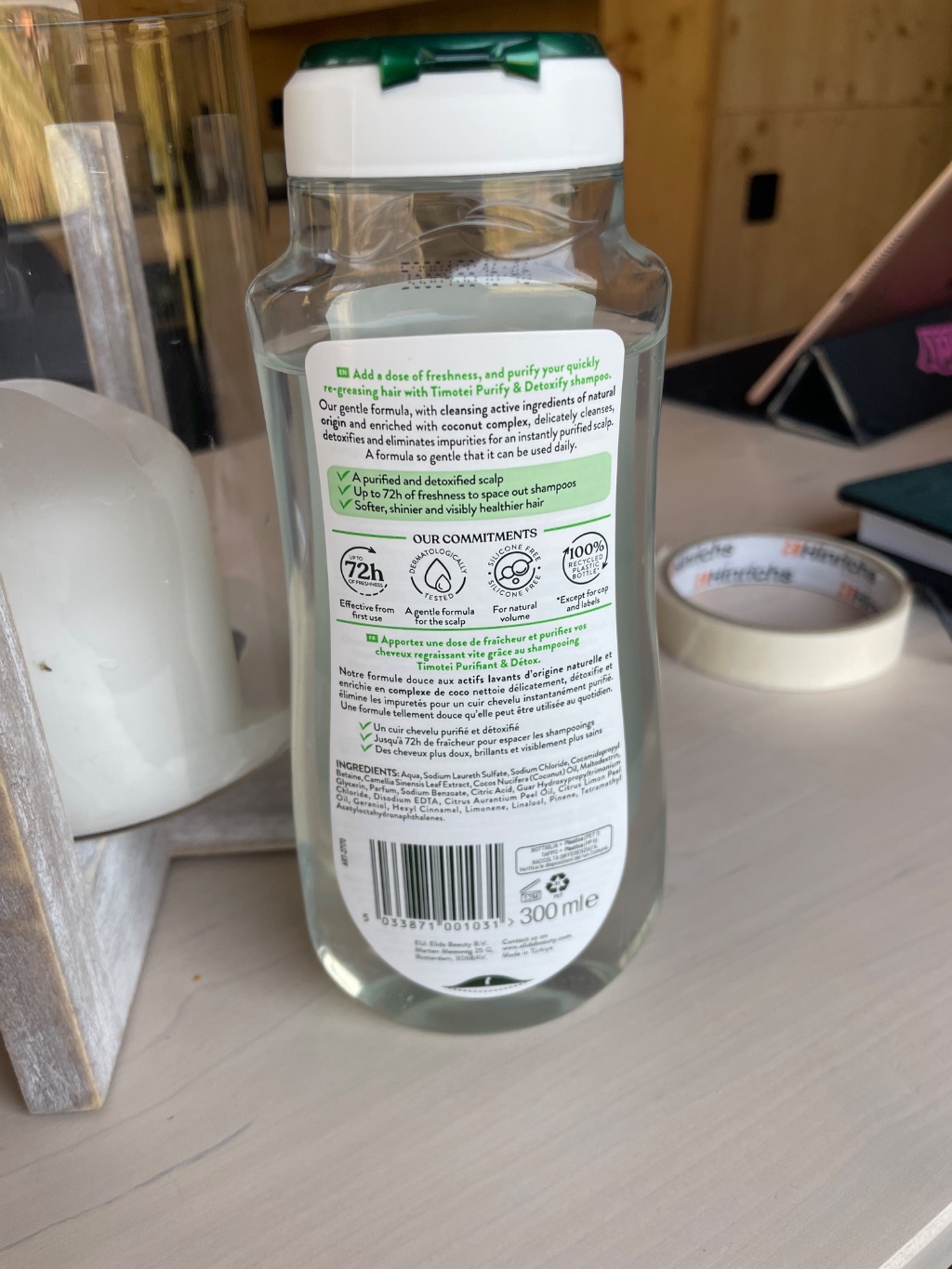
PERSONAL CARE ANALYSIS

Timotei Purify & Detoxify Shampoo

AI-Powered Safety Report · SafeShelf

🌐 This is a public scan General scans are publicly accessible and may appear in search engines and the community Discover gallery. Do not upload labels containing personal information. If you want a private analysis tailored to your health, create a free account and use Personalised Scanning →
⚕️ Data Aggregation & Medical Disclaimer SafeShelf is a technology platform, not a medical provider. This analysis is generated by an AI system that aggregates public regulatory data (such as EU and FDA databases) and is provided for educational and informational purposes only. It is not medical advice, a clinical diagnosis, or a substitute for professional healthcare guidance. SafeShelf has no doctors on staff and cannot guarantee the accuracy of AI-generated assessments.

Do not make health, dietary, or medical decisions based solely on this report. Always consult a qualified healthcare professional — especially if you have a medical condition, are pregnant, take prescription medications, or are acting on behalf of an infant or child.

78
Good
Timotei Purify & Detoxify Shampoo
rinse-off shampoo high confidence

This is a standard rinse-off shampoo formulated for oily hair. It contains common surfactants and preservatives, with a fragrance blend that limits full transparency, but it avoids high-risk endocrine disruptors like parabens.

📊 Score Breakdown
Absorption Zone Risk
30% of overall
85
Rinse-off product with no high-penetration risk ingredients like aluminium chlorohydrate.
Toxic Chemical Presence
25% of overall
75
Contains Sodium Laureth Sulfate (SLES), which is a standard surfactant; no high-risk formaldehyde releasers detected.
Ingestion Risk
20% of overall
100
Not applicable to rinse-off hair products.
Fragrance Load
15% of overall
50
Contains 'Parfum' and specific fragrance allergens (Limonene, Linalool), which are undisclosed proprietary blends.
Microbiome Impact
10% of overall
80
Standard surfactant-based cleanser; no harsh antibacterial agents like triclosan.
🚨 Critical Warnings
Contains fragrance allergens (Limonene, Linalool, Hexyl Cinnamal, Geraniol) which may cause contact dermatitis in sensitive individuals.
✅ What's Good
  • Contains Camellia Sinensis (Green Tea) Leaf Extract
  • Contains Cocos Nucifera (Coconut) Oil
  • Contains Glycerin for moisture
🥜 Allergens Detected

These are personal risks — they are not universally harmful. People without these allergies or intolerances are unaffected.

Limonene Linalool Hexyl Cinnamal Geraniol
🕳️ Undisclosed Blends

These entries hide multiple constituents that are not individually declared on the label.

Parfum
Can legally hide dozens of individual chemical constituents and solvents.
⚠️ Flagged Ingredients
Parfum MEDIUM
Undisclosed fragrance blend; common cause of contact dermatitis and respiratory irritation.
Limonene LOW
Fragrance allergen; EU Cosmetic Regulation requires declaration when above threshold.
Linalool LOW
Fragrance allergen; EU Cosmetic Regulation requires declaration when above threshold.
🔬 Full Ingredient Breakdown

Every identified ingredient classified by safety level.

Aqua safe
Sodium Laureth Sulfate safe
Sodium Chloride safe
Cocamidopropyl Betaine safe
Camellia Sinensis Leaf Extract beneficial
Cocos Nucifera (Coconut) Oil beneficial
Maltodextrin safe
Glycerin beneficial
Parfum moderate
Sodium Benzoate safe
Citric Acid safe
Guar Hydroxypropyltrimonium Chloride safe
Disodium EDTA safe
Citrus Aurantium Peel Oil safe
Citrus Limon Peel Oil safe
Geraniol allergen
Hexyl Cinnamal allergen
Limonene allergen
Linalool allergen
Pinene safe
Tetramethyl Acetyloctahydronaphthalenes safe
💡 Recommendations
  • If you have sensitive skin or a history of contact dermatitis, perform a patch test before regular use.
  • Rinse thoroughly to ensure no surfactant residue remains on the scalp.
📚 Regulatory & Toxicological Context

The analysis for Timotei Purify & Detoxify Shampoo relies on aggregated data from global regulatory bodies. When evaluating products in the personal-care category, our AI cross-references ingredients against databases such as the European Chemicals Agency (ECHA), the US Food and Drug Administration (FDA) GRAS list, and the International Agency for Research on Cancer (IARC).

Consumer products often contain complex chemical formulations. While individual ingredients may be legally permitted in certain jurisdictions, emerging toxicological research frequently highlights the risks of bioaccumulation, endocrine disruption, and gut microbiome degradation. SafeShelf's mission is to provide transparent, accessible translations of these complex chemical nomenclatures so consumers can make informed decisions about their household exposure.

⚕️ Reminder: This AI report is for informational purposes only and does not replace professional medical advice. Ingredient safety can vary based on individual health factors, dosage, product formulation, and applicable regulations in your country. SafeShelf assumes no liability for decisions made based on this analysis.

🔍 Related Scans in this Category

What is Timotei Purify & Detoxify Shampoo?

Timotei Purify & Detoxify Shampoo is a rinse-off hair care product designed to cleanse and purify hair, particularly targeting individuals with oily hair. Marketed within the personal care category, this shampoo aims to provide a detoxifying effect, often appealing to consumers seeking a fresh feel and natural-inspired ingredients. As a standard shampoo, its primary function is to remove dirt, oil, and product buildup from the scalp and hair strands, preparing them for conditioning or styling. It falls into the broad category of daily-use shampoos, positioned for regular cleansing rather than specialized treatment.

The ingredient breakdown

This Timotei shampoo features a moderately complex ingredient list, typical for a commercial hair cleanser, comprising around 20 distinct components. Its formulation balances cleansing agents with conditioning elements and a significant fragrance blend. While it incorporates some plant-derived extracts and oils, a notable aspect is the presence of several fragrance allergens, which are common in many personal care products.

The primary cleansing action comes from surfactants like Sodium Laureth Sulfate and Cocamidopropyl Betaine. Sodium Laureth Sulfate (SLES) is a widely used anionic surfactant known for its effective lathering and cleansing properties. While some consumers express concern about SLES, regulatory bodies like the FDA generally consider it safe for use in rinse-off products. Cocamidopropyl Betaine, a milder amphoteric surfactant, helps to boost lather and reduce potential irritation from stronger cleansing agents. The formula also includes beneficial ingredients such as Camellia Sinensis (Green Tea) Leaf Extract, known for its antioxidant properties, and Cocos Nucifera (Coconut) Oil, which can provide moisture and shine to the hair, alongside Glycerin, a humectant that draws moisture into the hair.

A significant portion of the ingredient list is dedicated to fragrance and related components. The term Parfum (fragrance) represents a complex, proprietary blend of aromatic chemicals, which can include dozens of individual substances. This blend is the primary source of the product's scent but also introduces potential allergens. Specific fragrance allergens explicitly listed include Limonene, Linalool, Hexyl Cinnamal, and Geraniol. These compounds, naturally present in essential oils like Citrus Aurantium Peel Oil and Citrus Limon Peel Oil also found in the shampoo, are recognized by the EU Cosmetic Regulation as requiring declaration when above certain thresholds due to their potential to cause contact dermatitis or allergic reactions in sensitive individuals.

Regulatory standing and hidden ingredients

A key aspect of this product's formulation, common across many personal care items, is the inclusion of 'Parfum' or 'fragrance'. Under current regulations in many regions, including the EU and US, 'Parfum' is considered an opaque blend. This means that manufacturers are not required to disclose the specific chemical constituents that make up the fragrance mixture. This single term can legally hide dozens of individual chemical compounds, some of which may be sensitizers or irritants, making it challenging for consumers with sensitivities to identify potential triggers. While specific fragrance allergens like Limonene and Linalool are declared when present above certain levels, the full composition of the 'Parfum' remains undisclosed.

What this means for your health

For most individuals, using Timotei Purify & Detoxify Shampoo as intended (a rinse-off product) poses a low realistic exposure risk. The primary ingredients, including the surfactants, are generally considered safe for topical use and are washed away, limiting skin absorption. However, the presence of a significant fragrance load and specific declared allergens like Limonene, Linalool, Hexyl Cinnamal, and Geraniol means that individuals with sensitive skin or a history of contact allergies should exercise caution. These compounds are known to be potential sensitizers, meaning repeated exposure could lead to allergic reactions such as redness, itching, or rashes.

While this shampoo avoids high-risk endocrine disruptors like parabens, the undisclosed nature of the 'Parfum' blend means that consumers cannot fully assess all potential irritants or allergens. Pregnant individuals, young children, or those with pre-existing skin conditions like eczema or psoriasis might be more susceptible to adverse reactions from fragrance components. For the average consumer without known sensitivities, the product is likely well-tolerated, but awareness of potential fragrance-related issues is important for informed personal care choices.

Safer alternatives to consider

For consumers seeking a shampoo with a more transparent and potentially gentler ingredient profile, several attributes can guide their choices. Look for products explicitly labeled 'fragrance-free' or 'unscented' to avoid the undisclosed chemicals often hidden within 'Parfum' blends and to minimize exposure to common fragrance allergens. Opt for shampoos that clearly list all botanical extracts and essential oils, rather than grouping them under a generic 'fragrance' term. Additionally, individuals with very sensitive scalps might consider shampoos with milder, sulfate-free cleansing agents, though Sodium Laureth Sulfate is generally well-tolerated in rinse-off formulations.

The bottom line

Timotei Purify & Detoxify Shampoo offers effective cleansing, particularly for oily hair, and incorporates some beneficial plant-derived ingredients. Its formulation avoids some of the higher-risk chemicals like parabens. However, the presence of an undisclosed 'Parfum' blend and several declared fragrance allergens means it carries a moderate risk for individuals with sensitive skin or allergies. For the average consumer without known sensitivities, it's likely a suitable choice, but those prone to skin reactions should consider fragrance-free alternatives to minimize potential irritation.

❓ Frequently Asked Questions
Is Timotei Purify & Detoxify Shampoo safe for sensitive skin?

Timotei Purify & Detoxify Shampoo contains several fragrance allergens like Limonene and Linalool, which can cause contact dermatitis in sensitive individuals. While it's a rinse-off product, those with sensitive skin or a history of allergies should use it with caution or consider fragrance-free alternatives to minimize potential irritation.

Does Timotei Purify & Detoxify Shampoo contain parabens?

No, the ingredient analysis for Timotei Purify & Detoxify Shampoo indicates that it does not contain parabens. The product utilizes other preservatives, such as Sodium Benzoate, which are generally considered safe for use in rinse-off personal care products according to regulatory standards.

What does 'Parfum' mean in Timotei Purify & Detoxify Shampoo's ingredients?

'Parfum' is a generic term that represents a complex, undisclosed blend of aromatic chemicals used to create the product's scent. While some specific allergens within the blend are listed, the full composition remains proprietary. This opacity means consumers cannot identify all potential irritants or sensitizers within the fragrance mixture.

The editorial article above was AI-generated from this product's ingredient analysis. It is for informational purposes only and is not medical advice.

Get a Personalised Analysis

Register free and scans will be tailored to your medications, conditions, and health goals.

Register Free →