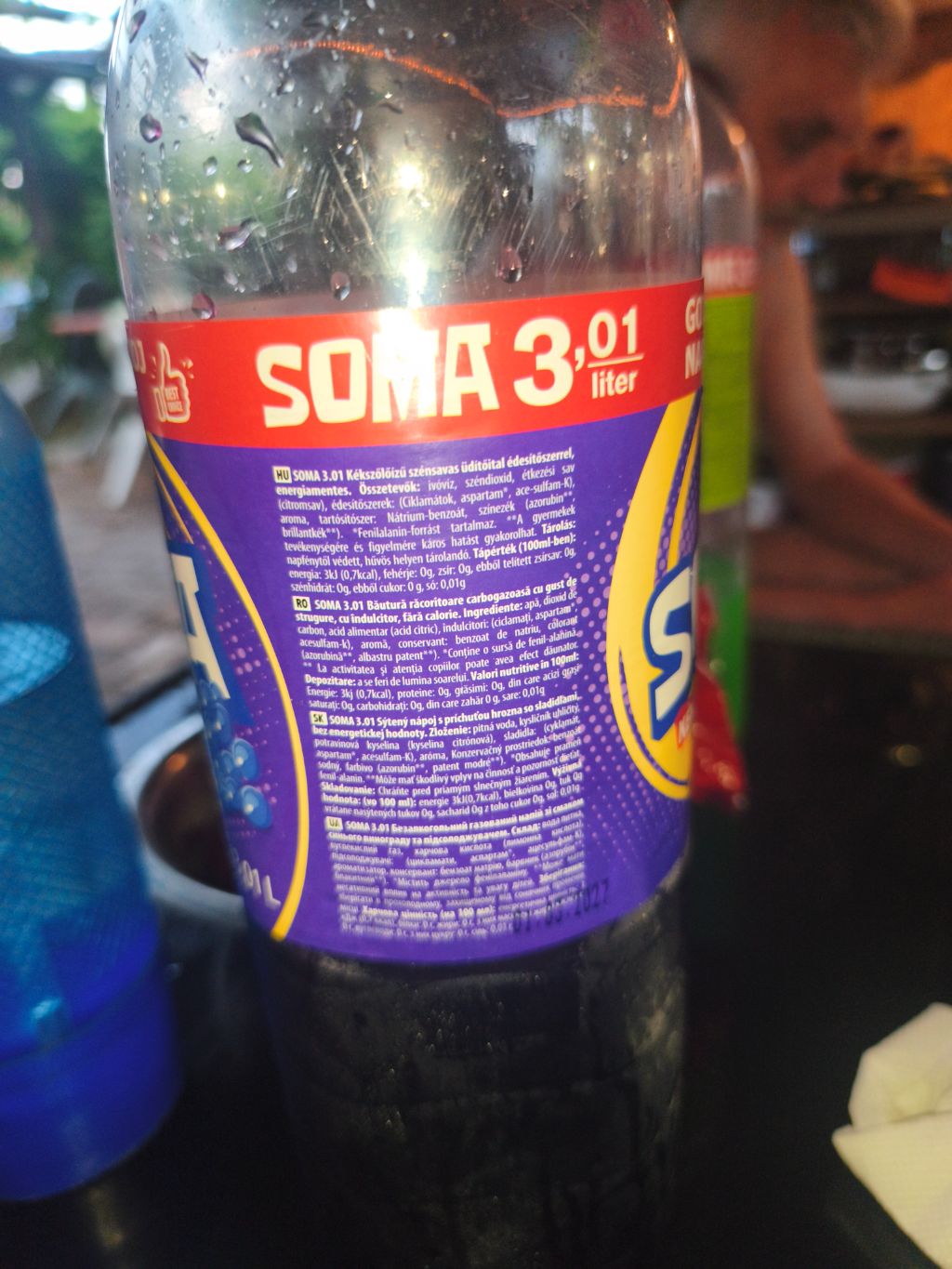
What is SOMA 3.01 Kékszőlőízű szénsavas üdítőital?
SOMA 3.01 Kékszőlőízű szénsavas üdítőital is a grape-flavored carbonated soft drink marketed as a sugar-free alternative to traditional sodas. Falling into the ultra-processed beverage category, it targets consumers looking to reduce sugar intake while still enjoying a sweet, fizzy drink. Unlike beverages sweetened with natural sugars or fruit juices, this product relies entirely on artificial sweeteners and synthetic additives to achieve its taste and appearance, positioning it as a diet-friendly option in the competitive soft drink market.
The ingredient breakdown
This SOMA beverage features a relatively simple ingredient list, yet it is dominated by synthetic compounds rather than whole food components. Its composition primarily consists of water, carbon dioxide, and a notable array of artificial sweeteners, synthetic colorings, and a preservative. This profile reflects a highly processed product designed for taste and shelf stability without offering significant nutritional value.
Artificial Sweeteners
The sweetness in this beverage comes from a blend of three artificial compounds: Aspartame, Acesulfame-K, and Cyclamate. Aspartame is a source of phenylalanine, making it unsafe for individuals with phenylketonuria (PKU). While the FDA and EFSA deem these sweeteners safe at approved levels, the International Agency for Research on Cancer (IARC) recently classified aspartame as "possibly carcinogenic to humans" (Group 2B). Acesulfame-K and Cyclamate are also non-caloric sweeteners, generally approved, though some studies continue to investigate their long-term effects on gut microbiota and metabolic health.
Synthetic Colorings
To achieve its grape-like hue, SOMA 3.01 uses two synthetic food colorings: Azorubin (Carmoisine) and Patent Blue V. Azorubin is an azo dye that, in the European Union, requires a warning label stating it "may have an adverse effect on activity and attention in children" when used in foods and beverages. While the FDA permits Azorubin without such a warning in the United States, the EU's stance reflects a precautionary principle regarding potential behavioral impacts. Patent Blue V is another artificial blue dye used to enhance visual appeal.
Preservatives
To ensure shelf stability and prevent microbial growth, the product contains Sodium benzoate. This synthetic preservative is widely used in acidic foods and beverages. While generally recognized as safe by the FDA, concerns have been raised about its potential to form benzene, a known carcinogen, when combined with ascorbic acid (Vitamin C) in certain conditions. However, the analysis of this specific product does not indicate the presence of Vitamin C, mitigating that particular concern, but it remains a synthetic additive in an ultra-processed matrix.
What this means for your health
For most healthy adults, occasional consumption of this beverage is unlikely to pose immediate severe risks. However, the cumulative effects of regularly consuming multiple artificial sweeteners and synthetic dyes are a growing area of scientific inquiry. Aspartame's classification by IARC as "possibly carcinogenic to humans" suggests caution with frequent intake. The presence of Azorubin also raises specific concerns for children, as European regulators advise a hyperactivity warning on products containing it.
Crucially, individuals with phenylketonuria (PKU) must strictly avoid this product due to its aspartame content. Parents of young children might consider alternatives given the EU's advisory on Azorubin and hyperactivity. For anyone aiming to reduce their intake of ultra-processed ingredients, or those with specific health conditions, opting for beverages with simpler, more natural ingredient profiles would be a prudent choice.
Safer alternatives to consider
When seeking safer alternatives to artificially sweetened and colored carbonated drinks, prioritize options with minimal processing and natural ingredients. Look for sparkling water infused with real fruit or natural fruit essences, without added sugars or artificial sweeteners. If sweetness is desired, consider beverages using naturally derived, non-caloric sweeteners like stevia or monk fruit extract in moderation, alongside natural colors from fruit and vegetable concentrates. Avoiding synthetic dyes like Azorubin and Patent Blue V, and preservatives like sodium benzoate, is key to reducing exposure to potentially concerning additives.
The bottom line
SOMA 3.01 Kékszőlőízű szénsavas üdítőital offers a sugar-free option, beneficial for managing sugar intake. However, this comes with a trade-off: a significant reliance on artificial sweeteners and synthetic colorings. While generally approved, ongoing scientific discussions and specific warnings for children and individuals with PKU suggest caution. For the average consumer, this beverage is best consumed sparingly, with more naturally composed drinks preferred for regular hydration.