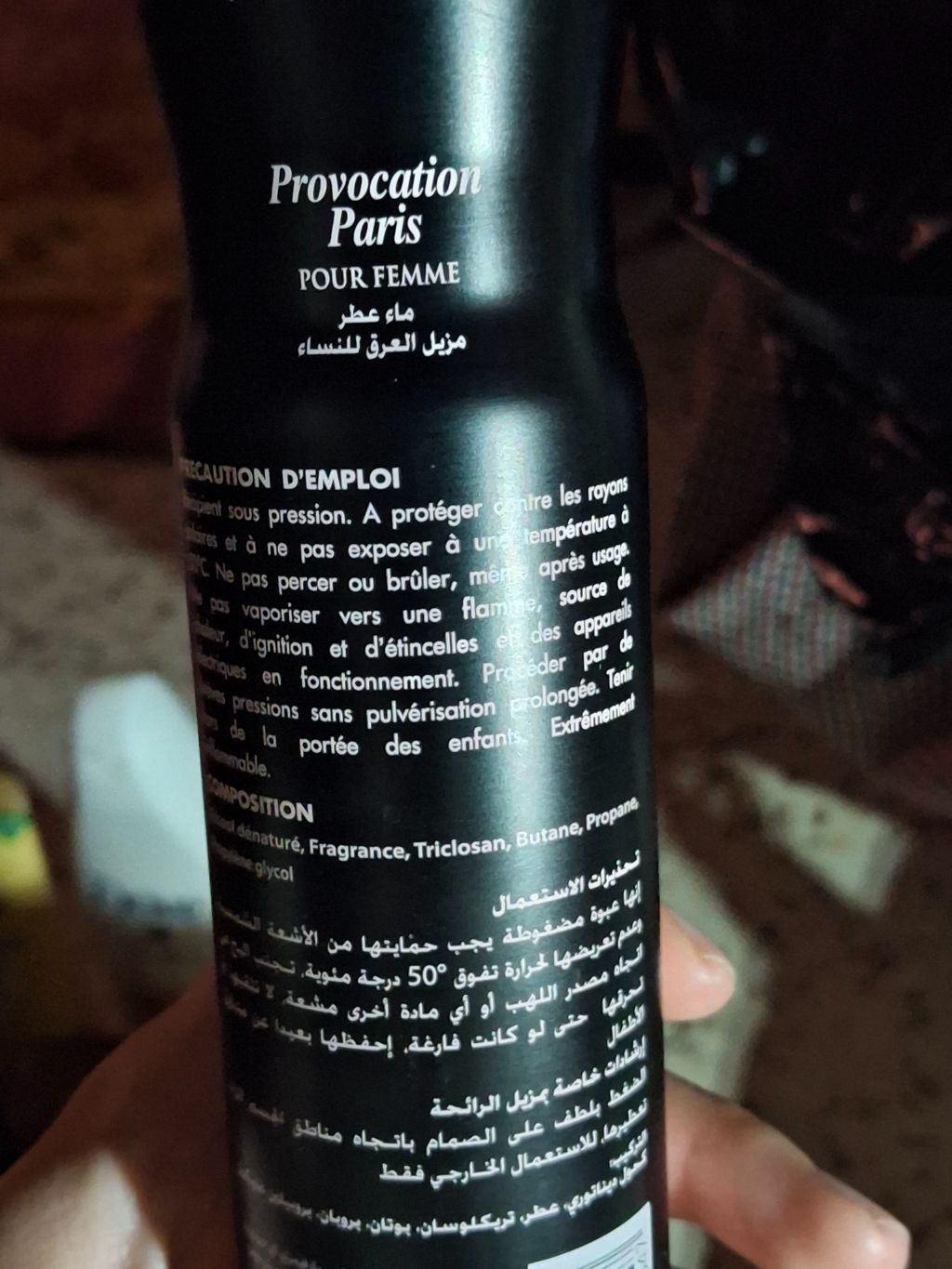
What is Provocation Paris Pour Femme Deodorant?
Provocation Paris Pour Femme Deodorant is an aerosol antiperspirant and deodorant product primarily marketed to women for daily underarm odor and wetness control. As an aerosol, it utilizes propellants to deliver a fine mist of active ingredients to the skin. This product falls into the chemical deodorant category, relying on synthetic compounds to achieve its effects, rather than mineral salts or natural ingredients typically found in 'natural' deodorants.
The ingredient breakdown
This deodorant features a relatively concise ingredient list, typical for an aerosol product, but includes several synthetic compounds that warrant closer examination. The overall composition leans heavily on propellants, alcohol, and a potent antibacterial agent, alongside undisclosed fragrance components.
A primary ingredient of concern is Triclosan, an antibacterial and antifungal agent. While effective at killing odor-causing bacteria, triclosan has been identified by regulatory bodies like the European Chemicals Agency (ECHA) as a potential endocrine disruptor. Studies suggest it can interfere with thyroid hormones and estrogen receptors (ER-α), raising concerns about its impact on reproductive and developmental health. The FDA has restricted its use in some consumer antiseptic wash products due to insufficient evidence of long-term safety and efficacy over soap and water, though it remains permitted in other personal care items like toothpaste and some deodorants. Furthermore, triclosan is a broad-spectrum antimicrobial that can disrupt the delicate balance of the skin's natural microbiome, potentially leading to unintended consequences.
The product also contains Fragrance (Parfum), a common term that represents an undisclosed mixture of various chemical compounds. Under current regulations, manufacturers are not required to list individual fragrance components, allowing for a proprietary blend. This lack of transparency is concerning because fragrances are a frequent cause of contact dermatitis, allergic reactions, and respiratory irritation, especially for individuals with sensitive skin, asthma, or chemical sensitivities. Common fragrance allergens include limonene, linalool, and geraniol, which can be present without explicit labeling.
Other notable ingredients include Butane and Propane, which serve as propellant gases, and Alcohol denat (denatured alcohol). While essential for the aerosol delivery system, these propellants contribute to the product's flammability and can be respiratory irritants if inhaled in high concentrations. Alcohol denat acts as a solvent and helps the product dry quickly, but it can also be very drying and irritating to the skin, potentially compromising the skin barrier, especially when applied to freshly shaved or broken skin. Propylene glycol is also present, acting as a humectant to help retain moisture, and is generally recognized as safe by the FDA, though it can occasionally cause irritation in sensitive individuals.
What this means for your health
For the average consumer, the daily use of Provocation Paris Pour Femme Deodorant introduces exposure to ingredients with known or suspected health implications. The presence of triclosan, applied directly to the underarm area where absorption can occur, raises particular concern due to its potential as an endocrine disruptor. While the exact level of risk from typical deodorant use is debated, cumulative exposure to such chemicals from multiple personal care products is a consideration for overall health. Individuals with pre-existing hormonal conditions or those trying to minimize exposure to endocrine-disrupting chemicals may wish to exercise caution.
Furthermore, the undisclosed fragrance blend and alcohol content pose a realistic risk for skin irritation and allergic reactions. People with sensitive skin, eczema, or a history of contact allergies are particularly vulnerable. Those with respiratory sensitivities, such as asthma, might also find the aerosol format and fragrance irritating. Pregnant individuals are often advised to limit exposure to endocrine-disrupting chemicals like triclosan, making this product a potential concern during pregnancy. It is always wise to perform a patch test if you have sensitive skin or known allergies.
Safer alternatives to consider
When seeking safer alternatives, prioritize deodorants that are free from triclosan, undisclosed 'fragrance' (parfum), and propellant gases. Look for solid stick or roll-on formulations that utilize natural odor absorbers like baking soda, magnesium hydroxide, or arrowroot powder. Products that are explicitly labeled 'fragrance-free' or use only clearly identified natural essential oils (with caution for potential sensitivities) are preferable. Opting for aluminum-free options is also a common choice for those looking to avoid antiperspirants and focus solely on odor control.
The bottom line
Provocation Paris Pour Femme Deodorant offers convenience and odor control, but its formulation includes ingredients that present moderate concerns. The presence of triclosan and undisclosed fragrance components, alongside propellant gases and drying alcohol, suggests potential risks for endocrine disruption, skin irritation, and allergic reactions. While not an outright 'dangerous' product for everyone, health-conscious consumers, particularly those with sensitivities or specific health concerns, should consider exploring alternatives with more transparent and benign ingredient profiles.