SUPPLEMENT ANALYSIS

Pregnata

AI-Powered Safety Report · SafeShelf

🌐 This is a public scan General scans are publicly accessible and may appear in search engines and the community Discover gallery. Do not upload labels containing personal information. If you want a private analysis tailored to your health, create a free account and use Personalised Scanning →
⚕️ Data Aggregation & Medical Disclaimer SafeShelf is a technology platform, not a medical provider. This analysis is generated by an AI system that aggregates public regulatory data (such as EU and FDA databases) and is provided for educational and informational purposes only. It is not medical advice, a clinical diagnosis, or a substitute for professional healthcare guidance. SafeShelf has no doctors on staff and cannot guarantee the accuracy of AI-generated assessments.

Do not make health, dietary, or medical decisions based solely on this report. Always consult a qualified healthcare professional — especially if you have a medical condition, are pregnant, take prescription medications, or are acting on behalf of an infant or child.

75
Good
Pregnata
prenatal multivitamin high confidence

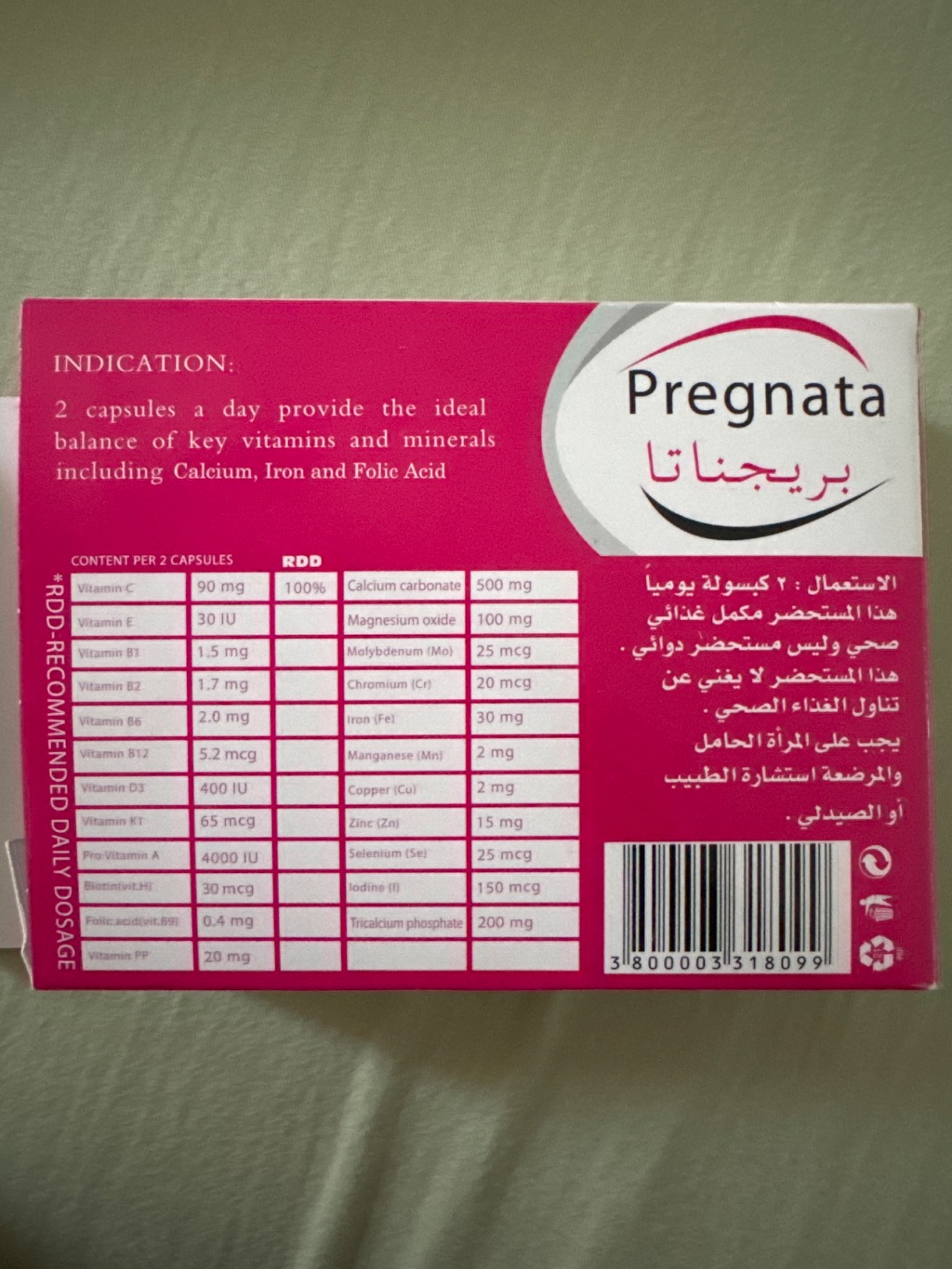
Pregnata is a prenatal multivitamin providing a broad spectrum of essential nutrients for pregnancy. While it contains necessary vitamins and minerals, it relies on less bioavailable forms like magnesium oxide and calcium carbonate, and lacks modern forms like methylfolate.

📊 Score Breakdown
Drug Interaction Risk
30% of overall
90
Contains standard prenatal levels of nutrients; no high-risk interactions with common medications.
Megadose Toxicity
25% of overall
95
All nutrient levels are within safe, standard ranges for prenatal supplementation.
Bioavailability Quality
20% of overall
50
Uses oxide and carbonate forms which have lower absorption rates compared to chelated or methylated forms.
Filler Quality
15% of overall
70
Standard capsule ingredients; no concerning artificial dyes or proprietary blends identified.
Label Transparency
10% of overall
90
Clear dosage provided for all active ingredients per 2-capsule serving.
🚨 Critical Warnings
Consult your physician or pharmacist before starting any supplement during pregnancy or breastfeeding.
This product is a dietary supplement and does not replace a balanced, healthy diet.
✅ What's Good
  • Provides essential prenatal nutrients including Folic Acid, Iron, and Calcium
  • Comprehensive vitamin profile supporting maternal and fetal health
  • Clear, transparent dosage labeling
⚠️ Flagged Ingredients
Magnesium oxide LOW
Low bioavailability compared to other forms like magnesium glycinate.
Calcium carbonate LOW
Requires stomach acid for optimal absorption and may cause digestive discomfort in some users.
🔬 Full Ingredient Breakdown

Every identified ingredient classified by safety level.

Vitamin C beneficial
Vitamin E beneficial
Vitamin B1 beneficial
Vitamin B2 beneficial
Vitamin B6 beneficial
Vitamin B12 beneficial
Vitamin D3 beneficial
Vitamin K1 beneficial
Pro-Vitamin A beneficial
Biotin beneficial
Folic acid beneficial
Vitamin PP beneficial
Calcium carbonate moderate
Magnesium oxide moderate
Molybdenum beneficial
Chromium beneficial
Iron beneficial
Manganese beneficial
Copper beneficial
Zinc beneficial
Selenium beneficial
Iodine beneficial
Tricalcium phosphate beneficial
💡 Recommendations
  • Take with food to improve the absorption of calcium and iron and reduce potential stomach upset.
  • Discuss with your healthcare provider if you are taking other medications, particularly thyroid medication or antibiotics, as iron and calcium can interfere with absorption.
📚 Regulatory & Toxicological Context

The analysis for Pregnata relies on aggregated data from global regulatory bodies. When evaluating products in the supplement category, our AI cross-references ingredients against databases such as the European Chemicals Agency (ECHA), the US Food and Drug Administration (FDA) GRAS list, and the International Agency for Research on Cancer (IARC).

Consumer products often contain complex chemical formulations. While individual ingredients may be legally permitted in certain jurisdictions, emerging toxicological research frequently highlights the risks of bioaccumulation, endocrine disruption, and gut microbiome degradation. SafeShelf's mission is to provide transparent, accessible translations of these complex chemical nomenclatures so consumers can make informed decisions about their household exposure.

⚕️ Reminder: This AI report is for informational purposes only and does not replace professional medical advice. Ingredient safety can vary based on individual health factors, dosage, product formulation, and applicable regulations in your country. SafeShelf assumes no liability for decisions made based on this analysis.

🔍 Related Scans in this Category

What is Pregnata?

Pregnata is a prenatal multivitamin designed to support the nutritional needs of individuals during pregnancy. Marketed to expectant mothers, this supplement falls into the broad category of dietary supplements, specifically targeting the unique demands of maternal and fetal health. Its primary purpose is to fill potential nutritional gaps that might not be met through diet alone, providing a comprehensive blend of vitamins and minerals crucial for a healthy pregnancy journey.

The ingredient breakdown

Pregnata features a comprehensive array of essential vitamins and minerals, typical for a prenatal supplement. The ingredient list is extensive, covering most recommended nutrients for pregnancy. While it provides a broad spectrum, a closer look reveals a reliance on certain mineral forms that may not offer optimal bioavailability compared to more modern alternatives.

The supplement includes crucial vitamins such as Folic Acid, Vitamin D3, Iron, and various B vitamins (B1, B2, B6, B12). Folic Acid is particularly vital for preventing neural tube defects, a benefit widely recognized by health organizations like the CDC and FDA. Vitamin D3 supports bone health and immune function, while Iron is essential for preventing maternal anemia and supporting fetal growth. These vitamins are present in standard, beneficial dosages for prenatal care.

However, the mineral profile includes forms like Magnesium oxide and Calcium carbonate. While both are recognized as safe sources of magnesium and calcium by the FDA, their bioavailability is generally lower than other forms, such as magnesium glycinate or calcium citrate. Magnesium oxide, for instance, has a relatively poor absorption rate, meaning a larger portion may pass through the digestive system unabsorbed. Similarly, calcium carbonate requires sufficient stomach acid for optimal absorption and can sometimes lead to digestive discomfort like constipation in sensitive individuals. The product also contains Folic acid rather than the more bioavailable methylfolate, which can be a consideration for individuals with MTHFR gene variations affecting folate metabolism.

What this means for your health

For most healthy individuals, Pregnata provides a generally safe and comprehensive foundation of prenatal nutrients. The levels of vitamins and minerals are within established safe ranges for pregnancy, minimizing risks of megadose toxicity or adverse drug interactions with common medications. The primary implication for your health lies in the *efficiency* of nutrient delivery rather than outright safety concerns. While the body will absorb some of the magnesium and calcium from the oxide and carbonate forms, it may not be as effective as with more bioavailable alternatives, potentially leading to less optimal nutrient status for some users.

Individuals with pre-existing digestive issues, low stomach acid, or those seeking to maximize nutrient absorption might find these forms less ideal. Pregnant individuals with specific genetic predispositions, such as MTHFR variations, might also prefer a supplement containing methylfolate for more direct utilization. As always, consulting with a healthcare provider is crucial to determine the most appropriate prenatal supplement for individual needs, especially during pregnancy or breastfeeding.

Safer alternatives to consider

When seeking a prenatal multivitamin with potentially better absorption, look for products that utilize chelated forms of minerals, such as magnesium glycinate, magnesium citrate, calcium citrate, or calcium malate. These forms are often more readily absorbed and may cause less digestive upset. Additionally, consider supplements that provide methylated forms of B vitamins, particularly L-methylfolate (or 5-MTHF) instead of synthetic folic acid, which can be beneficial for individuals with genetic variations affecting folate metabolism. Opting for products with transparent labeling and minimal unnecessary fillers is also a good practice.

The bottom line

Pregnata is a generally safe prenatal multivitamin that delivers a broad spectrum of essential nutrients vital for a healthy pregnancy. Its strength lies in its comprehensive vitamin profile and clear labeling. However, its reliance on less bioavailable forms of certain minerals like magnesium oxide and calcium carbonate, and the use of folic acid instead of methylfolate, means it may not be the most optimal choice for everyone seeking maximum nutrient absorption. For the average reader, Pregnata is a decent option, but those prioritizing superior bioavailability might find better alternatives available.

❓ Frequently Asked Questions
Is Pregnata safe to take during pregnancy?

Yes, Pregnata is generally considered safe for use during pregnancy. It provides a comprehensive range of essential vitamins and minerals at levels typically recommended for maternal and fetal health. However, it's always advisable to consult your physician or pharmacist before starting any new supplement during pregnancy or breastfeeding to ensure it meets your specific health needs.

What are the main ingredients in Pregnata and what do they do?

Pregnata contains a broad spectrum of vitamins and minerals, including Folic Acid, Vitamin D3, Iron, and various B vitamins, all crucial for prenatal health. Folic Acid helps prevent neural tube defects, Iron supports blood health, and Vitamin D3 aids bone development. It also includes minerals like Magnesium oxide and Calcium carbonate, which provide essential nutrients but in forms that may have lower bioavailability.

Are there any concerns about nutrient absorption with Pregnata?

Some concerns exist regarding the bioavailability of certain minerals in Pregnata. It uses Magnesium oxide and Calcium carbonate, which are less readily absorbed by the body compared to chelated forms like magnesium glycinate or calcium citrate. This means that while the nutrients are present, the body might not utilize them as efficiently as with other supplement forms, potentially leading to suboptimal absorption for some individuals.

The editorial article above was AI-generated from this product's ingredient analysis. It is for informational purposes only and is not medical advice.

Get a Personalised Analysis

Register free and scans will be tailored to your medications, conditions, and health goals.

Register Free →