What is Plumspeak Coconut Milk Shampoo?
Plumspeak Coconut Milk Shampoo is a personal care product designed for cleansing hair and scalp, falling into the rinse-off shampoo category. It is marketed to general consumers seeking a nourishing hair care solution, emphasizing ingredients like coconut milk and pea peptide extracts. Unlike some specialized treatments, this product serves as an everyday shampoo, aiming to clean while providing conditioning benefits, and is formulated without parabens or phthalates, common concerns in modern personal care.
The ingredient breakdown
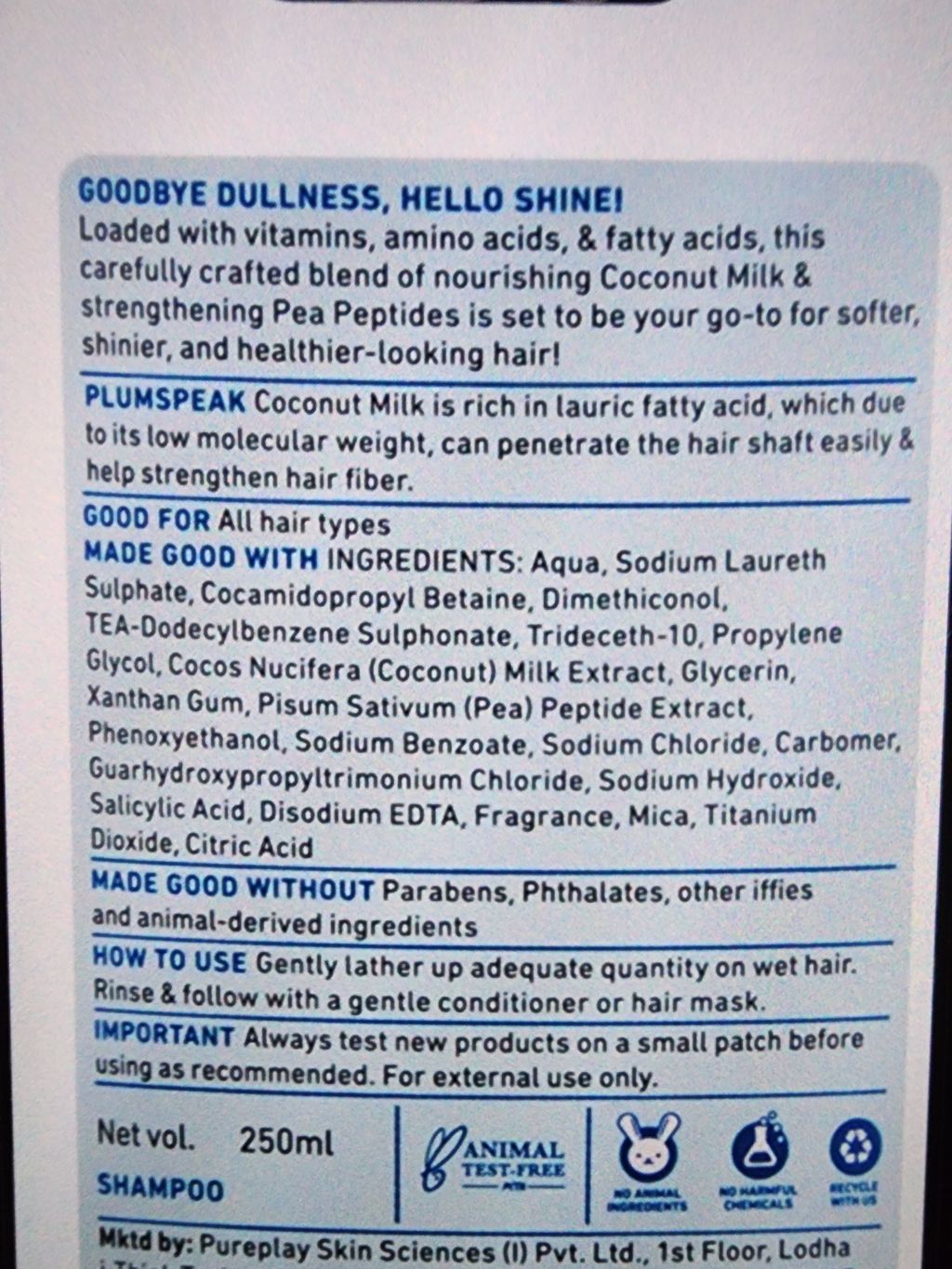
This Plumspeak shampoo features a comprehensive list of ingredients, totaling over twenty components. Its formulation is built around standard cleansing agents, complemented by a range of conditioning compounds, botanical extracts, and preservatives. While it incorporates beneficial ingredients, it also includes synthetic fragrance and common sulfate-based surfactants, which are notable for their potential effects on sensitive individuals.
The primary cleansing agents in this shampoo include Sodium Laureth Sulphate (SLES) and Cocamidopropyl Betaine. SLES is a widely used anionic surfactant responsible for creating lather and effectively removing oil and dirt. While highly effective, SLES can sometimes lead to scalp dryness or irritation, particularly for those with sensitive skin. Cocamidopropyl Betaine, a milder amphoteric surfactant, often works in conjunction with SLES to moderate its potential harshness and enhance foam stability, contributing to a gentler cleansing experience.
For conditioning and texture, the shampoo utilizes ingredients such as Dimethiconol, a silicone-based polymer that provides a smooth feel and helps detangle hair, and Trideceth-10, an emulsifier and surfactant that can also aid in product consistency. Propylene Glycol and Glycerin act as humectants, drawing moisture into the hair, while Guarhydroxypropyltrimonium Chloride is a conditioning agent that reduces static and improves manageability. These ingredients collectively work to leave hair feeling soft and conditioned after washing.
The product also highlights botanical extracts like Cocos Nucifera (Coconut) Milk Extract and Pisum Sativum (Pea) Peptide Extract, which are included for their purported nourishing and strengthening properties. Preservatives such as Phenoxyethanol and Sodium Benzoate are present to prevent microbial growth and maintain product integrity, ensuring safety and shelf-life. Salicylic Acid is also included, often used for its exfoliating properties, which can benefit scalp health by helping to remove dead skin cells.
Regulatory standing and hidden ingredients
A significant aspect of this product's formulation is the inclusion of "Fragrance." Under current regulations in many regions, including the United States, "Fragrance" or "Parfum" is considered a proprietary blend and does not require manufacturers to disclose its individual chemical constituents on the ingredient label. This means a single "Fragrance" entry can legally encompass dozens of different chemicals, some of which may be known allergens or irritants. For consumers, this opacity makes it challenging to identify potential triggers for contact dermatitis, respiratory irritation, or other sensitivities.
What this means for your health
For most individuals, using Plumspeak Coconut Milk Shampoo as intended—a rinse-off product—presents a low realistic exposure risk. The contact time with the skin and scalp is limited, which generally reduces the likelihood of significant absorption of ingredients into the bloodstream. However, individuals with particularly sensitive skin or a history of allergies should exercise caution. The presence of synthetic "Fragrance" is the primary concern, as it is a common culprit for skin irritation, redness, or even respiratory sensitivities in susceptible people. A patch test is always recommended before full use to identify any individual adverse reactions.
While the shampoo is free from parabens and phthalates, which are often cited as endocrine disruptors, the inclusion of Sodium Laureth Sulphate (SLES) may contribute to scalp dryness or irritation for some. Pregnant individuals, young children, or those with pre-existing skin conditions like eczema or psoriasis might find their skin more reactive to these ingredients. The overall ingredient profile suggests a product that is generally safe for the average consumer, but awareness of potential irritants is key for those with sensitivities.
Safer alternatives to consider
For consumers seeking alternatives with a potentially gentler profile, look for shampoos explicitly labeled "fragrance-free" or "unscented" to avoid undisclosed chemical blends. Opt for products that utilize milder, naturally derived surfactants such as coco-glucoside, decyl glucoside, or sodium cocoyl isethionate, rather than strong sulfates like SLES. Additionally, prioritize formulations with a shorter, more transparent ingredient list, focusing on known emollients and humectants like aloe vera or plant-based oils, and avoiding synthetic dyes or unnecessary additives.
The bottom line
Plumspeak Coconut Milk Shampoo offers a generally acceptable ingredient profile, notably free from parabens and phthalates, and includes beneficial botanical extracts. However, the presence of undisclosed "Fragrance" and the use of Sodium Laureth Sulphate mean it may not be ideal for individuals with sensitive skin or fragrance allergies. For the average consumer, it's a standard shampoo, but those prone to irritation should consider a patch test or explore fragrance-free, sulfate-alternative options.