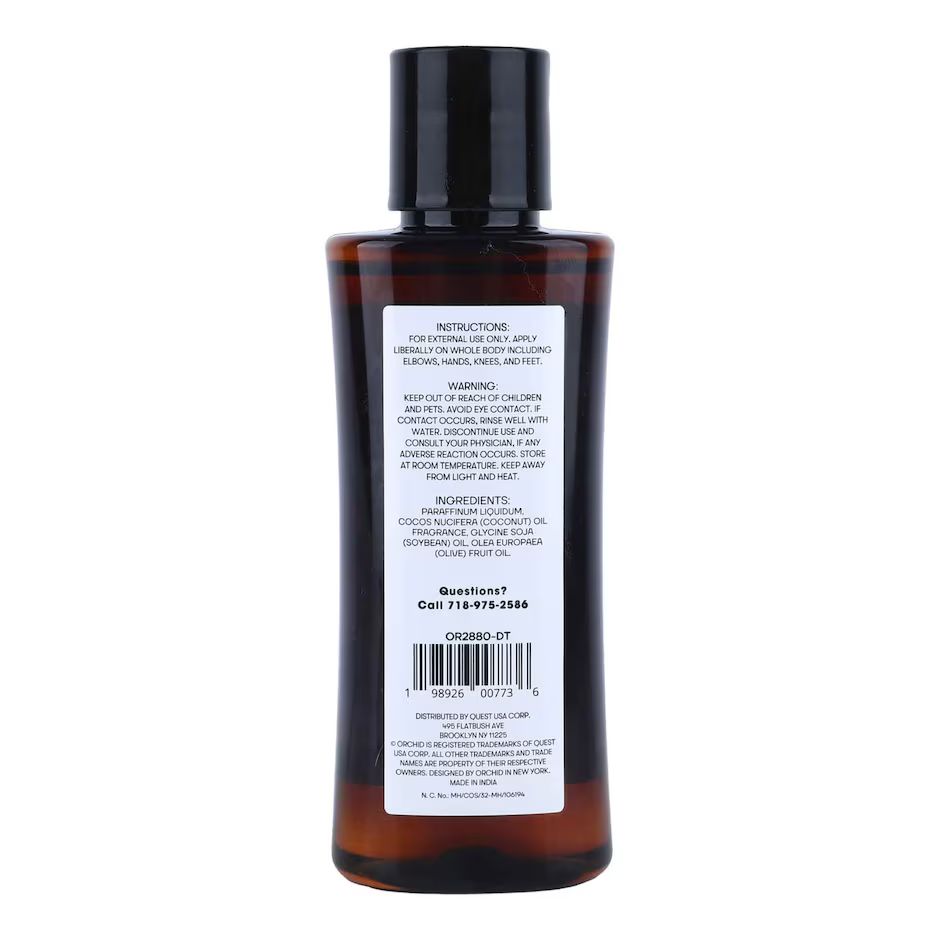
What is Orchid Body Oil?
Orchid Body Oil is a personal care product designed as a leave-on moisturizer for the skin. Marketed to individuals seeking hydration and a smooth skin feel, it falls into the category of body oils. Unlike lotions or creams, body oils typically feature a higher concentration of emollients and occlusives, aiming to seal in moisture and provide a protective barrier. This particular formulation emphasizes a blend of mineral and plant-derived oils for its conditioning properties.
The ingredient breakdown
The Orchid Body Oil features a relatively straightforward ingredient list, primarily composed of five key components. This simple profile contributes to its overall low-risk assessment, with the majority of ingredients serving as emollients or skin conditioners. The main point of scrutiny, however, lies in the inclusion of a common, yet often opaque, additive.
The base of Orchid Body Oil is Paraffinum Liquidum, commonly known as mineral oil. This ingredient acts as an occlusive, forming a protective barrier on the skin's surface to prevent moisture loss. The FDA considers cosmetic-grade mineral oil safe for topical use, as it is non-comedogenic and rarely causes allergic reactions. It is a highly refined petroleum byproduct, distinct from unrefined petroleum, and its safety for cosmetic use is well-established by regulatory bodies globally.
Complementing the mineral oil are several beneficial plant-derived oils. Cocos Nucifera (Coconut) Oil, Glycine Soja (Soybean) Oil, and Olea Europaea (Olive) Fruit Oil are included for their emollient and conditioning properties. Coconut oil is known for its fatty acid profile that can help moisturize skin. Soybean oil is rich in antioxidants and fatty acids, contributing to skin nourishment. Olive fruit oil also provides antioxidant benefits and helps to soften the skin. These natural oils are widely recognized for their skin-friendly attributes and are generally considered safe for topical application.
The most notable ingredient for potential concern is Fragrance. While it provides the product's scent, "Fragrance" is a catch-all term that can represent a complex mixture of dozens of undisclosed chemicals. These blends are proprietary and not required to be itemized on ingredient labels, making it difficult for consumers to identify potential irritants or allergens. Regulatory bodies like the FDA do not require fragrance components to be listed individually, allowing manufacturers to protect trade secrets, but this lack of transparency can be problematic for individuals with sensitivities.
Regulatory standing and hidden ingredients
A significant aspect of the Orchid Body Oil's ingredient profile is the presence of "Fragrance." Under current regulations in the United States, the term "Fragrance" or "Parfum" allows manufacturers to include a proprietary blend of aromatic chemicals, solvents, and preservatives without disclosing the individual constituents. This means that a single listing of "Fragrance" on an ingredient label can legally hide dozens of distinct chemical substances. This lack of transparency can pose a challenge for consumers, particularly those with allergies, sensitivities, or specific health concerns, as they cannot identify or avoid specific compounds that might trigger adverse reactions like contact dermatitis or respiratory irritation.
What this means for your health
For most individuals, Orchid Body Oil presents a low realistic exposure risk when used as intended. The primary ingredients, mineral oil and various plant oils, are generally well-tolerated and function by sitting on the skin's surface to provide hydration without significant systemic absorption. The product is designed for external use only, further minimizing internal exposure risks.
However, individuals with sensitive skin, a history of allergies, or conditions like eczema should exercise caution due to the inclusion of "Fragrance." While many people use fragranced products without issue, fragrance is a common trigger for contact dermatitis and sensitization. Pregnant individuals or parents considering this for children might also prefer fragrance-free options to minimize potential exposure to undisclosed chemicals, although no specific warnings are issued for these groups regarding this product. Always perform a patch test if you have known sensitivities.
Safer alternatives to consider
When seeking safer alternatives to fragranced body oils, look for products that explicitly state "fragrance-free" or "unscented." These formulations typically omit the complex and undisclosed chemical blends associated with "Fragrance." Prioritize products with simple ingredient lists featuring well-known emollients like petrolatum, shea butter, or plant-derived oils such as jojoba oil, sunflower oil, or argan oil, ensuring they are free from synthetic dyes or parabens. Opting for products where all ingredients are individually listed provides greater transparency and reduces the risk of exposure to potential irritants.
The bottom line
Orchid Body Oil offers effective moisturization through a blend of mineral and plant-derived oils, which are generally safe and beneficial for skin hydration. Its overall ingredient profile is relatively clean, with no high-risk toxic chemicals detected. The main consideration for consumers is the inclusion of "Fragrance," an undisclosed blend that can be a source of irritation for sensitive individuals. For those without fragrance sensitivities, this body oil is likely a suitable choice, but individuals with delicate skin or allergies may prefer to seek out truly fragrance-free alternatives for complete peace of mind.