PERSONAL CARE ANALYSIS

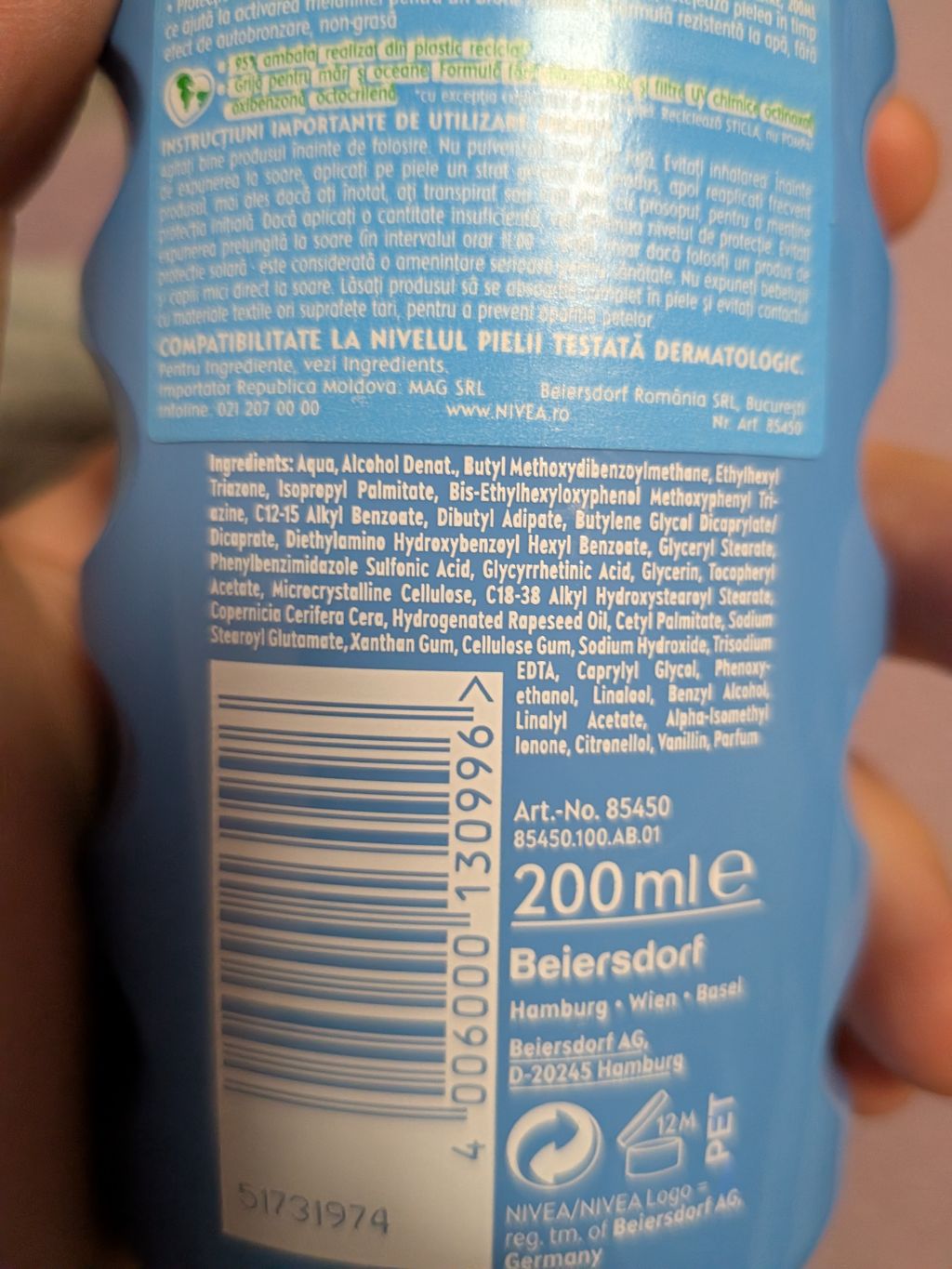
Nivea Sun Protect & Moisture Lotion

AI-Powered Safety Report · SafeShelf

🌐 This is a public scan General scans are publicly accessible and may appear in search engines and the community Discover gallery. Do not upload labels containing personal information. If you want a private analysis tailored to your health, create a free account and use Personalised Scanning →
⚕️ Data Aggregation & Medical Disclaimer SafeShelf is a technology platform, not a medical provider. This analysis is generated by an AI system that aggregates public regulatory data (such as EU and FDA databases) and is provided for educational and informational purposes only. It is not medical advice, a clinical diagnosis, or a substitute for professional healthcare guidance. SafeShelf has no doctors on staff and cannot guarantee the accuracy of AI-generated assessments.

Do not make health, dietary, or medical decisions based solely on this report. Always consult a qualified healthcare professional — especially if you have a medical condition, are pregnant, take prescription medications, or are acting on behalf of an infant or child.

72
Good
Nivea Sun Protect & Moisture Lotion
leave-on sunscreen high confidence

This is a standard chemical sunscreen formulated for body use. It contains effective UV filters but includes fragrance and alcohol denat, which may be irritating to sensitive skin types.

📊 Score Breakdown
Absorption Zone Risk
30% of overall
80
Contains chemical UV filters; no high-risk ingredients like aluminium chlorohydrate.
Toxic Chemical Presence
25% of overall
65
Contains Alcohol Denat. which can be drying, and several chemical filters that are effective but may cause sensitivity.
Ingestion Risk
20% of overall
100
Not a lip product; ingestion risk is negligible.
Fragrance Load
15% of overall
50
Contains 'Parfum' and several fragrance allergens (Linalool, Citronellol, etc.) which are common skin sensitizers.
Microbiome Impact
10% of overall
90
No harsh antibacterial agents that would significantly disrupt skin flora.
🚨 Critical Warnings
Contains fragrance allergens which may cause contact dermatitis in sensitive individuals.
✅ What's Good
  • Broad-spectrum UV protection
  • Contains Glycerin for skin hydration
  • Dermatologically tested
🥜 Allergens Detected

These are personal risks — they are not universally harmful. People without these allergies or intolerances are unaffected.

Linalool Benzyl Alcohol Citronellol
🕳️ Undisclosed Blends

These entries hide multiple constituents that are not individually declared on the label.

Parfum
Can hide dozens of undisclosed chemical constituents and solvents.
⚠️ Flagged Ingredients
Parfum MEDIUM
Undisclosed blend of fragrance chemicals; potential for skin sensitization.
Linalool MEDIUM
Known fragrance allergen; can cause contact dermatitis in sensitized individuals.
Citronellol MEDIUM
Known fragrance allergen; can cause contact dermatitis in sensitized individuals.
🔬 Full Ingredient Breakdown

Every identified ingredient classified by safety level.

Aqua safe
Alcohol Denat. moderate
Butyl Methoxydibenzoylmethane safe
Ethylhexyl Triazone safe
Isopropyl Palmitate safe
Bis-Ethylhexyloxyphenol Methoxyphenyl Triazine safe
C12-15 Alkyl Benzoate safe
Dibutyl Adipate safe
Butylene Glycol Dicaprylate/Dicaprate safe
Diethylamino Hydroxybenzoyl Hexyl Benzoate safe
Glyceryl Stearate safe
Phenylbenzimidazole Sulfonic Acid safe
Glycyrrhetinic Acid beneficial
Glycerin beneficial
Tocopheryl Acetate beneficial
Microcrystalline Cellulose safe
C18-38 Alkyl Hydroxystearoyl Stearate safe
Copernicia Cerifera Cera safe
Hydrogenated Rapeseed Oil safe
Cetyl Palmitate safe
Sodium Stearoyl Glutamate safe
Xanthan Gum safe
Cellulose Gum safe
Sodium Hydroxide safe
Trisodium EDTA safe
Caprylyl Glycol safe
Phenoxyethanol safe
Linalool allergen
Benzyl Alcohol allergen
Linalyl Acetate moderate
Alpha-Isomethyl Ionone moderate
Citronellol allergen
Vanillin safe
Parfum moderate
💡 Recommendations
  • Perform a patch test on a small area of skin before full-body application.
  • Reapply every 2 hours and after swimming or sweating as directed on the label.
📚 Regulatory & Toxicological Context

The analysis for Nivea Sun Protect & Moisture Lotion relies on aggregated data from global regulatory bodies. When evaluating products in the personal-care category, our AI cross-references ingredients against databases such as the European Chemicals Agency (ECHA), the US Food and Drug Administration (FDA) GRAS list, and the International Agency for Research on Cancer (IARC).

Consumer products often contain complex chemical formulations. While individual ingredients may be legally permitted in certain jurisdictions, emerging toxicological research frequently highlights the risks of bioaccumulation, endocrine disruption, and gut microbiome degradation. SafeShelf's mission is to provide transparent, accessible translations of these complex chemical nomenclatures so consumers can make informed decisions about their household exposure.

⚕️ Reminder: This AI report is for informational purposes only and does not replace professional medical advice. Ingredient safety can vary based on individual health factors, dosage, product formulation, and applicable regulations in your country. SafeShelf assumes no liability for decisions made based on this analysis.

🔍 Related Scans in this Category

What is Nivea Sun Protect & Moisture Lotion?

Nivea Sun Protect & Moisture Lotion is a leave-on chemical sunscreen designed for broad-spectrum UV protection and skin hydration. Marketed to a general consumer base, it aims to prevent sunburn and sun-induced skin damage while also providing moisturizing benefits. As a chemical sunscreen, it relies on synthetic compounds that absorb UV radiation, distinguishing it from mineral sunscreens that use zinc oxide or titanium dioxide to physically block rays.

The ingredient breakdown

This Nivea sunscreen features a comprehensive list of ingredients, primarily focusing on its chemical UV filters, alongside various emollients, humectants, and preservatives. While many components contribute to its protective and hydrating claims, the formulation also includes several fragrance compounds and alcohol, which are notable for their potential to cause skin sensitivity.

The core of this product's sun protection comes from its blend of chemical UV filters, including Butyl Methoxydibenzoylmethane, Ethylhexyl Triazone, Bis-Ethylhexyloxyphenol Methoxyphenyl Triazine, Diethylamino Hydroxybenzoyl Hexyl Benzoate, and Phenylbenzimidazole Sulfonic Acid. These ingredients work by absorbing ultraviolet (UV) radiation and converting it into a small amount of heat, thereby preventing it from damaging skin cells. Regulatory bodies like the FDA and EFSA generally consider these filters safe and effective for topical use in sunscreens, providing robust broad-spectrum protection against both UVA and UVB rays.

Beyond sun protection, the lotion incorporates several beneficial ingredients aimed at skin hydration and conditioning. Glycerin, a well-known humectant, draws moisture from the air into the skin, helping to maintain hydration. Glycyrrhetinic Acid, derived from licorice root, is recognized for its soothing properties, potentially helping to calm skin irritation. Additionally, Tocopheryl Acetate (a form of Vitamin E) acts as an antioxidant, offering some protection against environmental stressors, while Isopropyl Palmitate serves as an emollient to soften and smooth the skin.

However, the formulation also contains ingredients that may pose concerns for individuals with sensitive skin. Alcohol Denat. (denatured alcohol) is included, which can have a drying effect and potentially compromise the skin barrier with regular use, leading to irritation. Furthermore, the presence of Parfum (fragrance) and specific fragrance allergens such as Linalool, Citronellol, and Benzyl Alcohol is a key consideration. These compounds are common sensitizers, meaning they can trigger allergic reactions like contact dermatitis in susceptible individuals. The European Union mandates that these specific allergens be listed on product labels when present above certain concentrations due to their known potential for skin sensitization.

Regulatory standing and hidden ingredients

A significant aspect of ingredient transparency pertains to the use of umbrella terms like "Parfum" or "Fragrance." In Nivea Sun Protect & Moisture Lotion, the ingredient listed as Parfum represents an undisclosed blend of various chemicals. This legal loophole allows manufacturers to protect proprietary formulas, but it also means that consumers are not informed of the specific constituents within the fragrance mixture. These blends can contain dozens of individual chemicals, some of which may be potential allergens or sensitizers, making it challenging for individuals with sensitivities to identify triggers.

What this means for your health

For most individuals without known skin sensitivities, Nivea Sun Protect & Moisture Lotion offers effective broad-spectrum sun protection, which is crucial for preventing sunburn and reducing the risk of skin cancer. The inclusion of hydrating ingredients like glycerin also helps to counteract the drying effects sometimes associated with sun exposure. The primary health consideration for the average consumer using this product as intended is the potential for skin irritation or allergic reactions due to its fragrance components and alcohol content.

Individuals with sensitive skin, eczema, or a history of contact dermatitis should exercise caution. The presence of fragrance (Parfum) and specific allergens like Linalool and Citronellol increases the risk of developing skin redness, itching, or rashes. While the absorption of chemical UV filters into the bloodstream is a topic of ongoing research, for topical leave-on products like this, the most immediate and realistic exposure risk for an average consumer is localized skin sensitivity rather than systemic toxicity. Pregnant individuals or parents of young children might prefer to consult with a healthcare provider or opt for fragrance-free alternatives.

Safer alternatives to consider

For those seeking alternatives with a lower risk of irritation, look for sunscreens that prioritize mineral active ingredients such as zinc oxide or titanium dioxide, as these are generally well-tolerated and work by physically blocking UV rays. Additionally, choose products explicitly labeled as "fragrance-free" and "alcohol-free" to minimize exposure to common skin sensitizers. Opting for formulations with a shorter ingredient list and those certified by dermatological associations for sensitive skin can also provide a safer choice.

The bottom line

Nivea Sun Protect & Moisture Lotion provides reliable broad-spectrum UV protection, which is essential for skin health. Its moisturizing properties are a definite benefit for many users. However, the inclusion of fragrance and alcohol denat means it carries a moderate risk of irritation or allergic reactions for individuals with sensitive skin. For those without sensitivities, it's a functional sunscreen; however, if you have delicate or reactive skin, exploring fragrance-free and alcohol-free alternatives would be a more cautious approach.

❓ Frequently Asked Questions
Is Nivea Sun Protect & Moisture Lotion safe for sensitive skin?

Nivea Sun Protect & Moisture Lotion contains fragrance (Parfum) and alcohol denat, along with specific fragrance allergens like Linalool and Citronellol. These ingredients are known to cause irritation or allergic reactions in individuals with sensitive skin or conditions like eczema. Therefore, it may not be the best choice for very sensitive skin types.

What kind of UV filters are in Nivea Sun Protect & Moisture Lotion?

This lotion uses a blend of chemical UV filters, including Butyl Methoxydibenzoylmethane, Ethylhexyl Triazone, Bis-Ethylhexyloxyphenol Methoxyphenyl Triazine, Diethylamino Hydroxybenzoyl Hexyl Benzoate, and Phenylbenzimidazole Sulfonic Acid. These compounds work by absorbing UV radiation to protect the skin from sun damage, offering broad-spectrum protection.

Does Nivea Sun Protect & Moisture Lotion contain common allergens?

Yes, Nivea Sun Protect & Moisture Lotion contains several common fragrance allergens. These include Linalool, Citronellol, and Benzyl Alcohol, which are part of the 'Parfum' blend. These ingredients are known to cause contact dermatitis in sensitized individuals, and their presence is required to be listed on labels in regions like the EU.

The editorial article above was AI-generated from this product's ingredient analysis. It is for informational purposes only and is not medical advice.

Get a Personalised Analysis

Register free and scans will be tailored to your medications, conditions, and health goals.

Register Free →