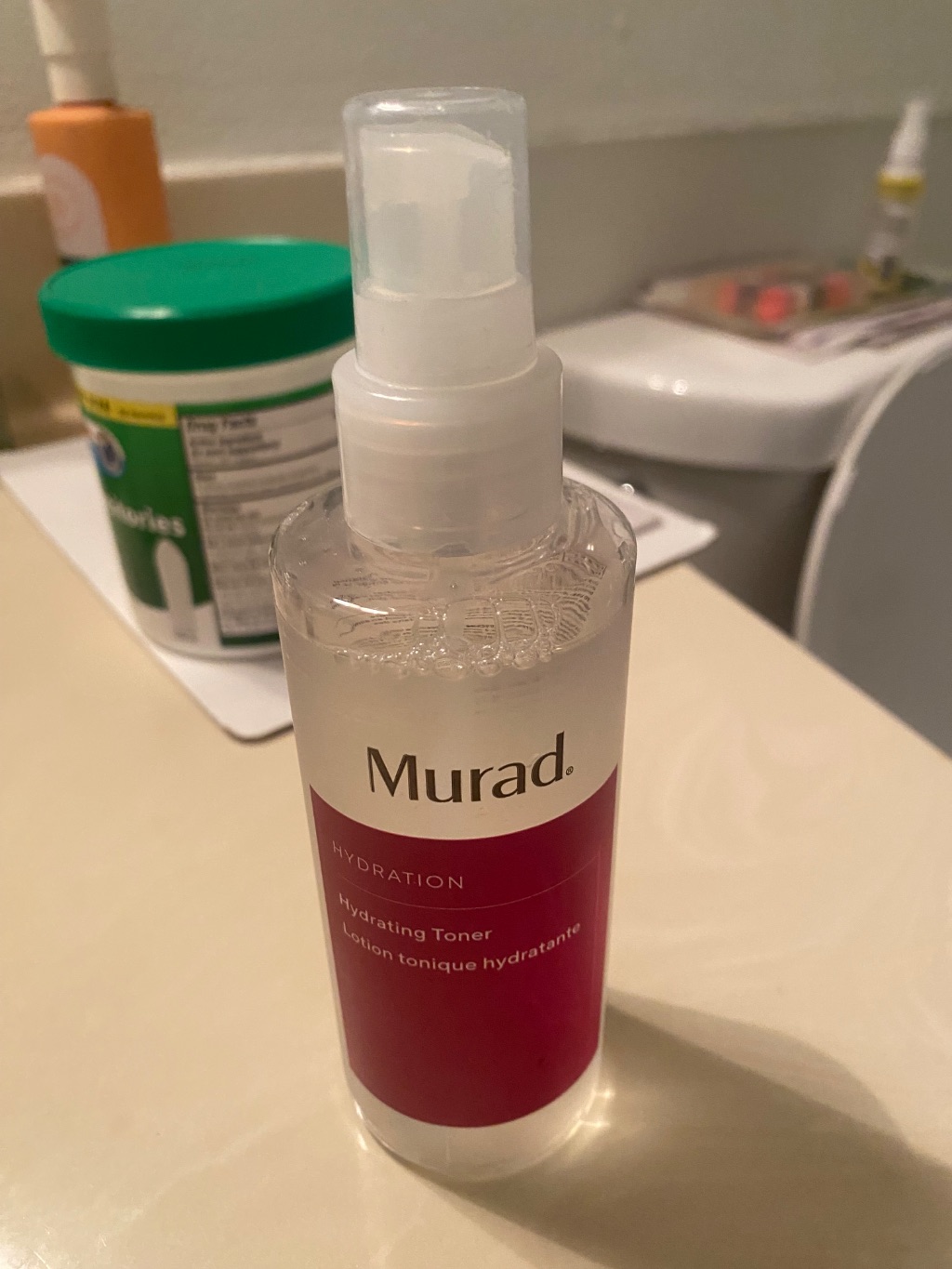
What is Murad Hydration Hydrating Toner?
Murad Hydration Hydrating Toner is a cosmetic product designed for facial use, typically applied after cleansing and before serums or moisturizers. It falls into the leave-on toner category, specifically formulated to enhance skin hydration and prepare the skin for subsequent treatments. Marketed to a broad audience seeking to improve skin moisture and balance, this product aims to provide a refreshing and conditioning step in a daily skincare routine.
The ingredient breakdown
This toner features a relatively streamlined ingredient list, emphasizing hydration and gentle formulation. Its composition primarily includes water-based humectants and pH adjusters, with a notable absence of many common high-risk ingredients. However, like many cosmetic products, it does include a generic fragrance component.
The core of this toner's hydrating power comes from ingredients like Water and Glycerin. Water serves as the primary solvent, while Glycerin acts as a powerful humectant, drawing moisture from the air into the skin to keep it supple and hydrated. Both are widely recognized as safe and beneficial by regulatory bodies such as the FDA and EFSA for their roles in maintaining skin barrier function. Additionally, Citric Acid is included, primarily as a pH adjuster to ensure the toner's acidity is balanced for optimal skin health, preventing potential irritation from formulas that are too alkaline or acidic.
The most significant ingredient of moderate concern in this product is Fragrance (Parfum). This generic term can represent a complex mixture of various chemical compounds, some of which are known allergens or irritants. While the FDA permits the use of 'fragrance' without requiring disclosure of individual components, this lack of transparency can be problematic for consumers with sensitivities. These undisclosed chemicals can trigger contact dermatitis, redness, or itching in susceptible individuals, even if the overall concentration is low.
What this means for your health
For the vast majority of consumers, Murad Hydration Hydrating Toner is a safe and effective product for its intended purpose of hydration. The formulation avoids common high-risk endocrine disruptors like parabens and phthalates, as well as harsh surfactants such as SLS/SLES, which are often linked to skin irritation. The presence of beneficial humectants further supports skin health and moisture retention.
However, individuals with highly sensitive skin or known fragrance allergies should exercise caution. The inclusion of 'Fragrance (Parfum)' means there's a potential for irritation or allergic reactions. For these populations, the realistic exposure risk, while generally low for an average consumer, warrants a patch test on a small, inconspicuous area of skin before incorporating the toner into a full facial routine. Pregnant individuals or those with specific skin conditions should consult a dermatologist if they have concerns about any ingredient.
Safer alternatives to consider
For consumers seeking alternatives, prioritize toners that explicitly state they are 'fragrance-free' or 'unscented.' Look for products with minimal ingredient lists, focusing on well-known humectants like glycerin, hyaluronic acid, or ceramides. Opt for toners that clearly disclose all ingredients, avoiding generic terms like 'fragrance' to ensure full transparency. Products formulated for sensitive skin, often bearing dermatologically tested labels, are also a good choice as they typically exclude common irritants.
The bottom line
Murad Hydration Hydrating Toner stands out as a generally well-formulated product, offering significant hydrating benefits without relying on many high-risk ingredients. Its freedom from parabens, phthalates, and harsh sulfates is commendable. However, the inclusion of generic 'Fragrance (Parfum)' presents a moderate concern for those with sensitive skin or fragrance allergies. For the average user, it's a good choice, but individuals prone to irritation should consider fragrance-free alternatives or perform a patch test.