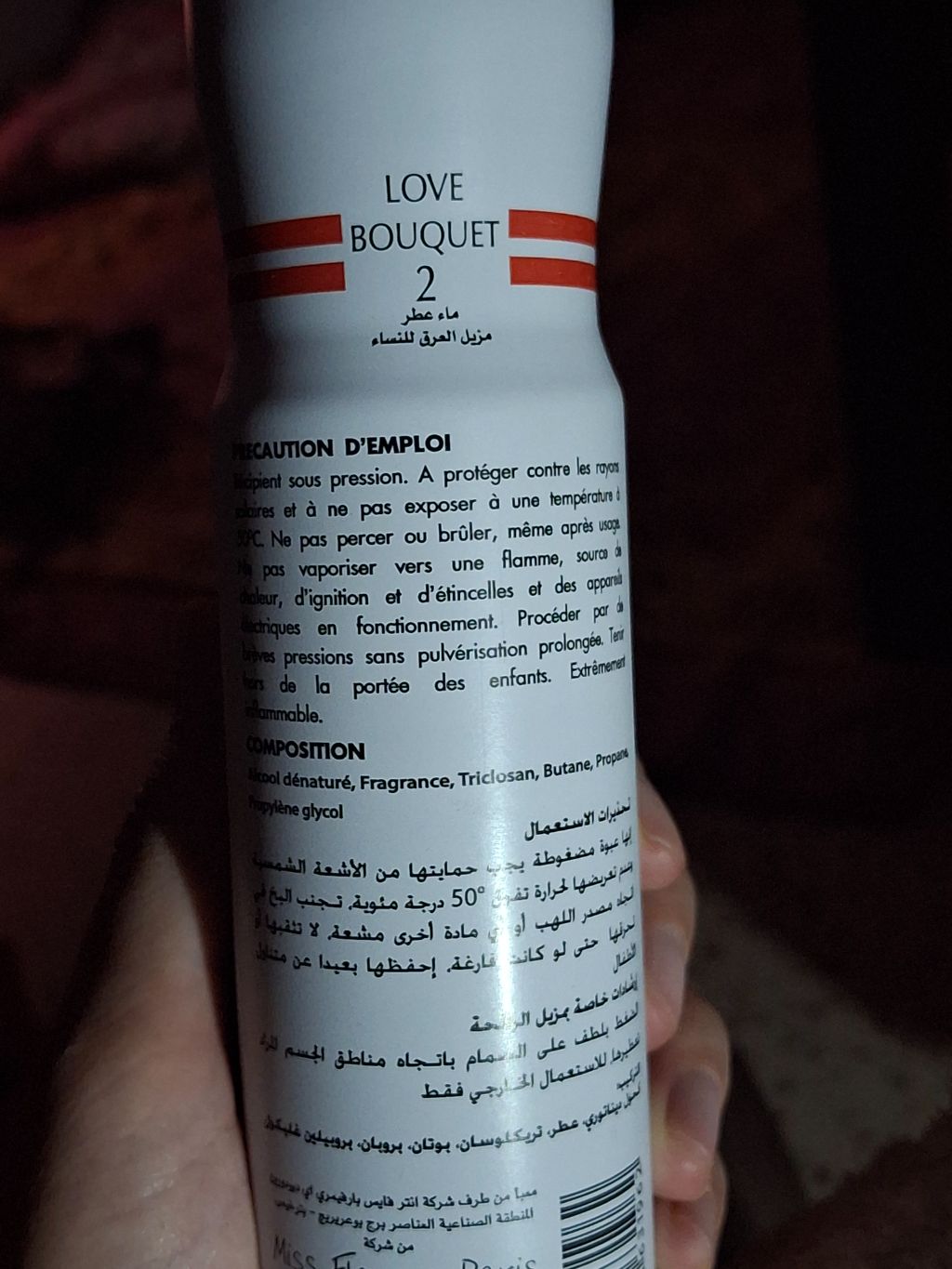
What is Love Bouquet 2 Deodorant?
Love Bouquet 2 Deodorant is an aerosol personal care product designed to reduce body odor and provide a feeling of freshness. Marketed for daily use, it falls into the broad category of antiperspirants and deodorants, specifically utilizing a spray format. This type of product typically combines active odor-fighting ingredients with propellants to deliver a fine mist onto the skin, primarily the underarms. Consumers often choose aerosol deodorants for their quick application and dry feel.
The ingredient breakdown
This aerosol deodorant features a concise ingredient list, primarily composed of propellants, a potent antibacterial agent, a solvent, and a complex fragrance blend. While some ingredients aim to combat odor effectively, others raise notable safety questions due to their known effects on human health and the environment.
Antimicrobial Agents and Their Impact
A key ingredient in Love Bouquet 2 Deodorant is Triclosan, a broad-spectrum antibacterial and antifungal agent. Its purpose here is to inhibit the growth of odor-causing bacteria on the skin. However, Triclosan has been a subject of significant scientific scrutiny. Research indicates it can act as an endocrine disruptor, potentially interfering with thyroid hormones and other hormonal systems. The FDA has banned Triclosan from many consumer antiseptic wash products due to insufficient evidence of benefit over soap and water, and concerns about bacterial resistance and endocrine effects. Furthermore, its use can disrupt the delicate balance of the skin's natural microbiome, which is crucial for skin health.
Propellants, Solvents, and Fragrance
The aerosol delivery system relies on propellants like Butane and Propane, which are liquefied gases that create the spray. While generally considered safe for their intended purpose, these can pose an inhalation risk, particularly if used in poorly ventilated areas or sprayed directly near the face. The product also contains Alcohol denat (denatured alcohol), which acts as a solvent to dissolve other ingredients and can contribute to a quick-drying sensation. However, in high concentrations, alcohol can be drying and irritating, especially for individuals with sensitive or compromised skin barriers. Propylene glycol is also present, functioning as a humectant to help retain moisture.
Another significant component is Fragrance, often a proprietary blend of numerous undisclosed chemicals. While providing a pleasant scent, these mixtures are a frequent cause of allergic contact dermatitis, skin irritation, and respiratory sensitivities. Regulatory bodies like the European Union require specific fragrance allergens to be listed if present above certain thresholds, but the full composition often remains a trade secret, making it difficult for consumers to identify specific irritants.
What this means for your health
The presence of Triclosan in an underarm product is a primary concern. The underarm area is a region where skin absorption can occur, potentially allowing Triclosan to enter the bloodstream, raising questions about long-term systemic exposure and its endocrine-disrupting potential. Individuals with sensitive skin, allergies, or respiratory conditions should also exercise caution due to the undisclosed 'Fragrance' blend and the drying effects of denatured alcohol, which can exacerbate irritation or trigger allergic reactions. The aerosol format itself carries an inhalation risk, particularly for those with asthma or other respiratory sensitivities, making proper ventilation crucial during use.
For the average consumer using this product as intended, the realistic exposure risk depends on individual susceptibility and frequency of use. While occasional use might not immediately manifest severe issues, chronic daily application of ingredients like Triclosan and synthetic fragrances in an absorption-prone area warrants consideration. Pregnant individuals and young children, whose hormonal systems are more vulnerable, might be advised to avoid products containing endocrine disruptors like Triclosan. The flammability warning also highlights a practical safety consideration for storage and use.
Safer alternatives to consider
When seeking safer alternatives, prioritize deodorants that avoid controversial ingredients. Look for products free from Triclosan, opting instead for natural odor absorbers like baking soda, magnesium hydroxide, or zinc ricinoleate. Choose fragrance-free options or those scented with essential oils if you know you tolerate them well. Non-aerosol formats such as sticks, roll-ons, or creams can eliminate inhalation risks associated with propellants. Additionally, consider products with simpler ingredient lists, focusing on those designed for sensitive skin to minimize potential irritation from alcohol or other solvents.
The bottom line
Love Bouquet 2 Deodorant offers convenience and odor control, but its formulation presents notable concerns. The inclusion of Triclosan, an endocrine disruptor and microbiome disrupter, along with undisclosed synthetic fragrance, raises questions about long-term health impacts and potential irritation. While the aerosol format is convenient, it carries inhalation risks. For those prioritizing ingredient safety and minimizing exposure to potentially harmful chemicals, it would be prudent to explore alternative deodorants with cleaner, more transparent ingredient profiles.