PERSONAL
CARE
ANALYSIS
Lancôme Sunscreen
AI-Powered Safety Report · SafeShelf
⚕️ Data Aggregation & Medical Disclaimer
SafeShelf is a technology platform, not a medical provider. This analysis is generated by an AI system that aggregates public regulatory data (such as EU and FDA databases) and is provided for educational and informational purposes only. It is not medical advice, a clinical diagnosis, or a substitute for professional healthcare guidance. SafeShelf has no doctors on staff and cannot guarantee the accuracy of AI-generated assessments.
Do not make health, dietary, or medical decisions based solely on this report. Always consult a qualified healthcare professional — especially if you have a medical condition, are pregnant, take prescription medications, or are acting on behalf of an infant or child.
Do not make health, dietary, or medical decisions based solely on this report. Always consult a qualified healthcare professional — especially if you have a medical condition, are pregnant, take prescription medications, or are acting on behalf of an infant or child.
85
Excellent
Lancôme Sunscreen
leave-on sunscreen
high confidence
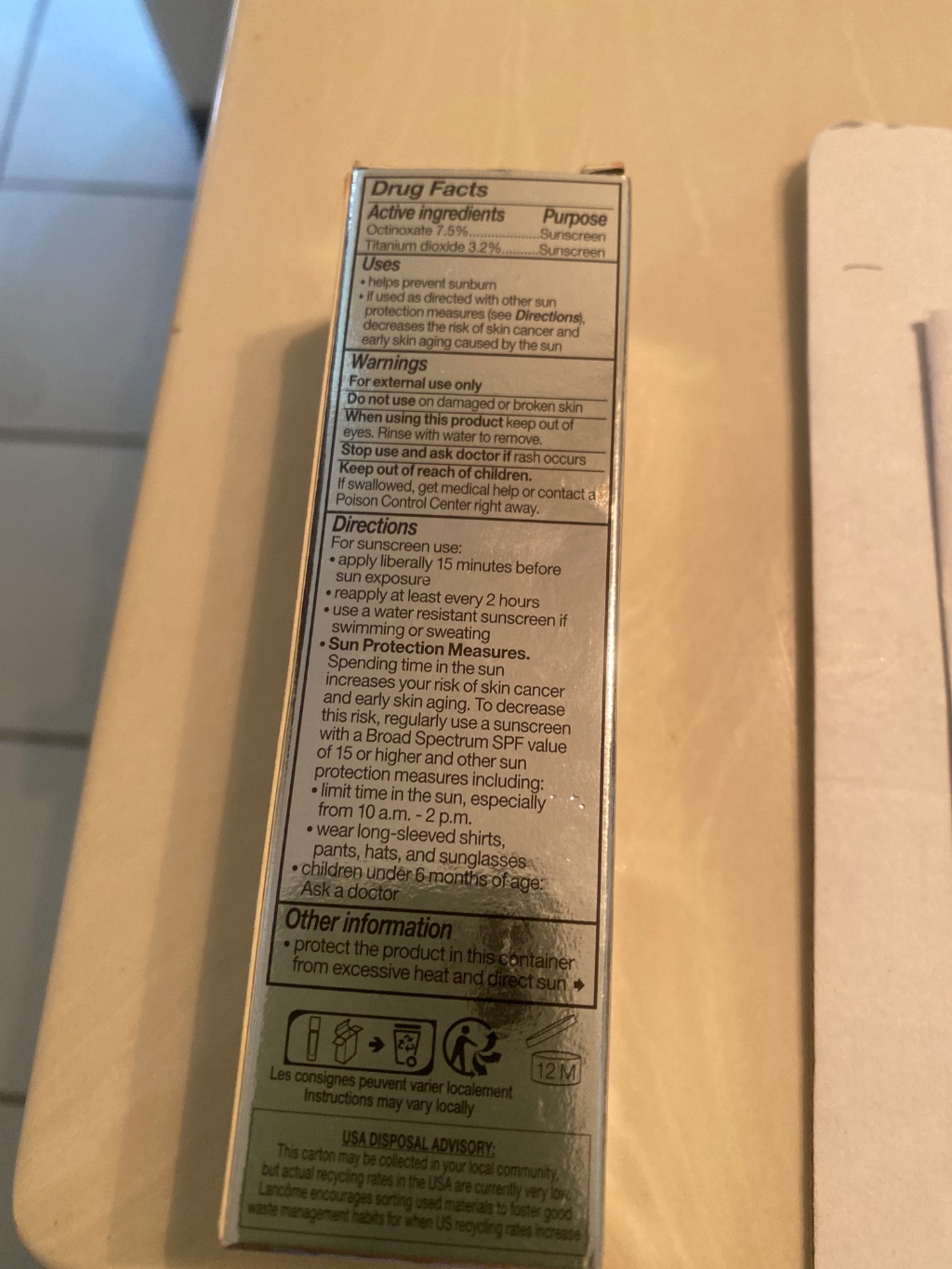
This is a sunscreen product containing standard UV filters. The formula is generally safe for topical use, though the ingredient list provided is incomplete as it only shows the active ingredients.
📊 Score Breakdown
Absorption Zone Risk
30% of overall
90
The active ingredients are standard, well-studied UV filters.
Toxic Chemical Presence
25% of overall
85
No high-risk toxic chemicals like benzene or triclosan are present in the active list.
Ingestion Risk
20% of overall
100
Not applicable as this is a topical sunscreen, not a lip product.
Fragrance Load
15% of overall
80
Fragrance status is unknown as the full ingredient list is not visible.
Microbiome Impact
10% of overall
100
No harsh antibacterial agents identified.
🚨 Critical Warnings
Ingredient list may be incomplete due to image crop; check full label for potential allergens or fragrance.
Consult a doctor for use on children under 6 months of age.
✅ What's Good
- ✓Contains Titanium dioxide, a safe and effective physical UV filter
- ✓Provides broad-spectrum sun protection to reduce skin cancer and aging risks
✅ No Flagged Ingredients
No harmful or concerning ingredients were detected in this product.
🔬 Full Ingredient Breakdown
Every identified ingredient classified by safety level.
Octinoxate
safe
Titanium dioxide
beneficial
💡 Recommendations
- →Apply liberally 15 minutes before sun exposure.
- →Reapply at least every 2 hours, or after swimming/sweating.
- →Use in conjunction with other sun protection measures like hats and protective clothing.
⚕️ Reminder: This AI report is for informational purposes only and does not replace
professional medical advice. Ingredient safety can vary based on individual health factors, dosage,
product formulation, and applicable regulations in your country. SafeShelf assumes no liability for
decisions made based on this analysis.