What is it's a 10 Miracle Leave-In Product?
it's a 10 Miracle Leave-In Product is a popular leave-on hair treatment designed to offer multiple benefits, including detangling, frizz control, and thermal protection. Marketed to a broad audience seeking convenient hair care solutions, this product falls into the personal care category of styling and conditioning treatments. Unlike rinse-off conditioners, its ingredients remain on the hair and scalp, potentially increasing exposure time and absorption, which is a key consideration for its overall safety profile.
The ingredient breakdown
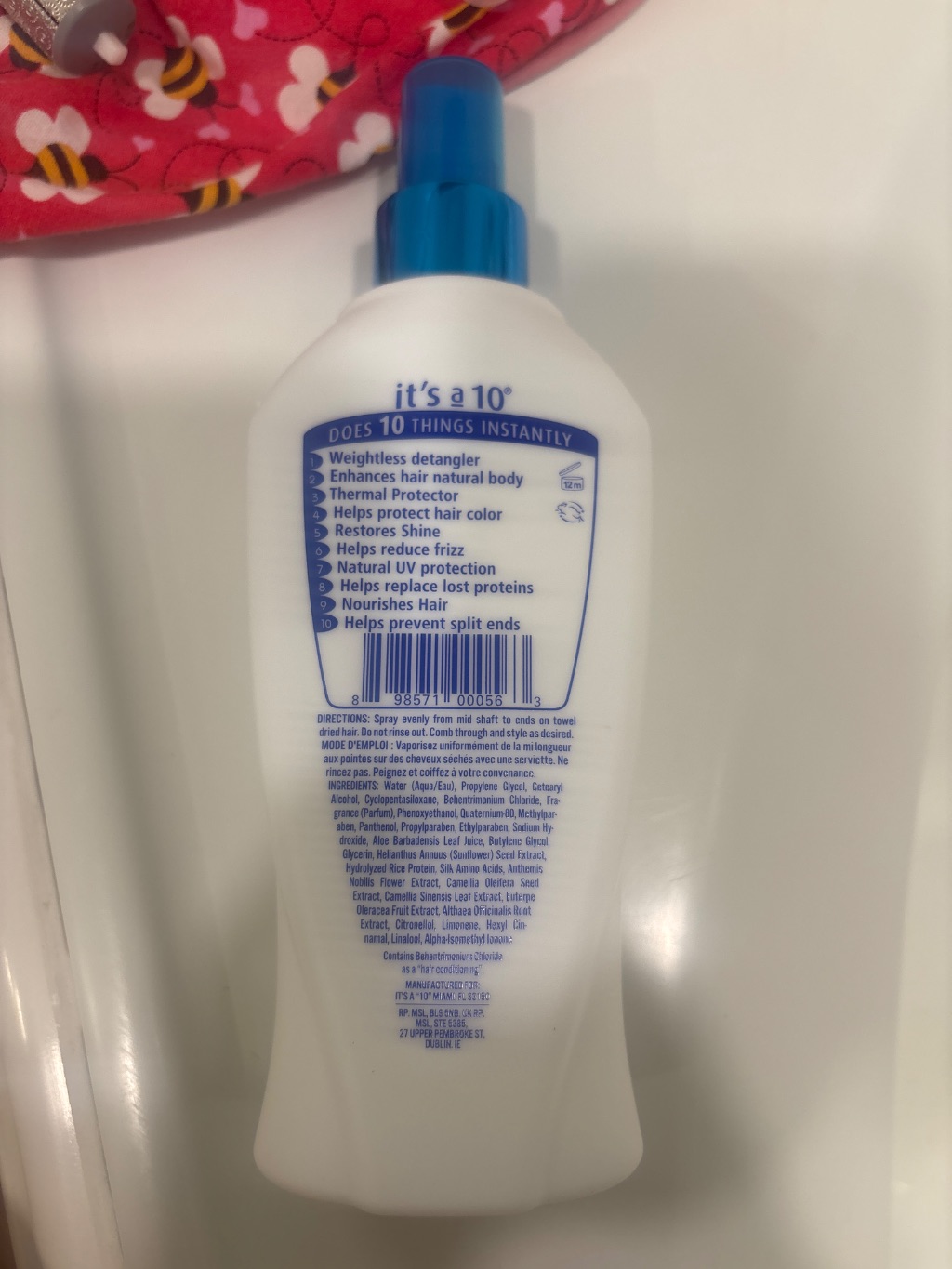
The formulation of it's a 10 Miracle Leave-In Product features a diverse array of ingredients, blending several beneficial conditioning agents with a notable presence of synthetic preservatives and undisclosed fragrance components. While many ingredients contribute positively to hair health and manageability, the inclusion of certain compounds raises questions regarding long-term safety, particularly for a product designed to remain on the hair and scalp.
Among its beneficial components, the product includes Panthenol (Pro-vitamin B5), a well-known humectant that attracts and holds moisture, enhancing hair elasticity and shine. Aloe Barbadensis Leaf Juice provides soothing properties, while Helianthus Annuus (Sunflower) Seed Extract offers natural UV protection, helping to guard hair against environmental damage. Hydrolyzed Rice Protein and Silk Amino Acids contribute to strengthening hair strands, reducing breakage, and improving texture. Additional botanical extracts like Anthemis Nobilis Flower Extract (chamomile) and Camellia Sinensis Leaf Extract (green tea) are included for their antioxidant and conditioning benefits.
However, a significant concern arises from the product's preservative system, which includes Methylparaben, Propylparaben, and Ethylparaben. These parabens are widely recognized as weak endocrine disruptors, meaning they can mimic estrogen in the body and potentially interfere with hormonal balance by binding to estrogen receptor-alpha (ER-α) sites. While individual exposure from a single product might be low, the cumulative effect from multiple personal care products containing parabens is a common concern. Phenoxyethanol is also present as a preservative, generally considered safer than parabens but still a moderate concern for some individuals.
Another area of concern is the inclusion of "Fragrance (Parfum)," an umbrella term that legally allows manufacturers to hide dozens of individual chemical constituents without disclosure. This blend is a frequent cause of contact dermatitis and allergic reactions, especially for individuals with sensitive skin or respiratory issues. The product also lists specific fragrance allergens such as Limonene, Linalool, Citronellol, Hexyl Cinnamal, and Alpha-Isomethyl Ionone, which are known to trigger sensitivities in susceptible individuals, contributing to the overall allergen load.
Regulatory standing and hidden ingredients
The regulatory landscape for cosmetic ingredients varies significantly across regions. For instance, Propylparaben, present in it's a 10 Miracle Leave-In Product, faces restrictions in EU cosmetics under Annex II/V, limiting its maximum concentration due to concerns about its endocrine-disrupting potential. While it remains unrestricted in the United States, this divergence highlights differing scientific interpretations and precautionary approaches to ingredient safety.
Furthermore, the term "Fragrance (Parfum)" represents an opaque blend of chemicals. Under current regulations in many countries, including the US, companies are not required to disclose the specific ingredients within a fragrance mixture, allowing for dozens of individual chemical constituents and solvents to remain unlisted. This lack of transparency makes it challenging for consumers to identify potential allergens or irritants, particularly for those with sensitivities or allergies to specific fragrance components.
What this means for your health
For the average consumer, the use of it's a 10 Miracle Leave-In Product presents a moderate exposure risk, primarily due to its leave-on nature and the presence of parabens and undisclosed fragrance. As a leave-on product, ingredients have a longer contact time with the scalp, which can lead to greater absorption into the body compared to rinse-off products. The cumulative exposure to multiple parabens from this and other personal care items could contribute to an overall endocrine burden, a particular concern for individuals trying to minimize exposure to hormone-disrupting chemicals.
Individuals with sensitive skin, allergies, or asthma should exercise extra caution due to the undisclosed fragrance blend and specific fragrance allergens like Limonene and Linalool, which are common irritants. Pregnant women and young children may also consider alternatives to minimize exposure to endocrine-disrupting chemicals, as their developing systems can be more vulnerable to hormonal interference. While the product offers beneficial conditioning, the trade-off involves potential risks from these synthetic components.
Safer alternatives to consider
When seeking safer alternatives for leave-in hair treatments, prioritize products that explicitly state they are "paraben-free" and "fragrance-free." Look for formulations that rely on natural conditioning agents and preservatives, such as plant-derived extracts and essential oils, though even natural essential oils can be allergenic for some. Opt for products with transparent ingredient lists, avoiding terms like "fragrance (parfum)" or "natural flavors" that can mask undisclosed chemicals. Simpler formulations with fewer ingredients often translate to a lower risk of irritation and exposure to concerning compounds.
The bottom line
it's a 10 Miracle Leave-In Product offers effective hair conditioning and protection, delivering on its promises for manageability and shine. However, its safety profile is tempered by the inclusion of multiple parabens, which are endocrine disruptors, and an undisclosed fragrance blend known to cause sensitivities. While convenient, consumers, especially those with sensitivities, pregnant individuals, or those seeking to minimize chemical exposure, should weigh these concerns. For a truly health-conscious choice, exploring paraben-free and fragrance-free alternatives would be a more prudent approach.