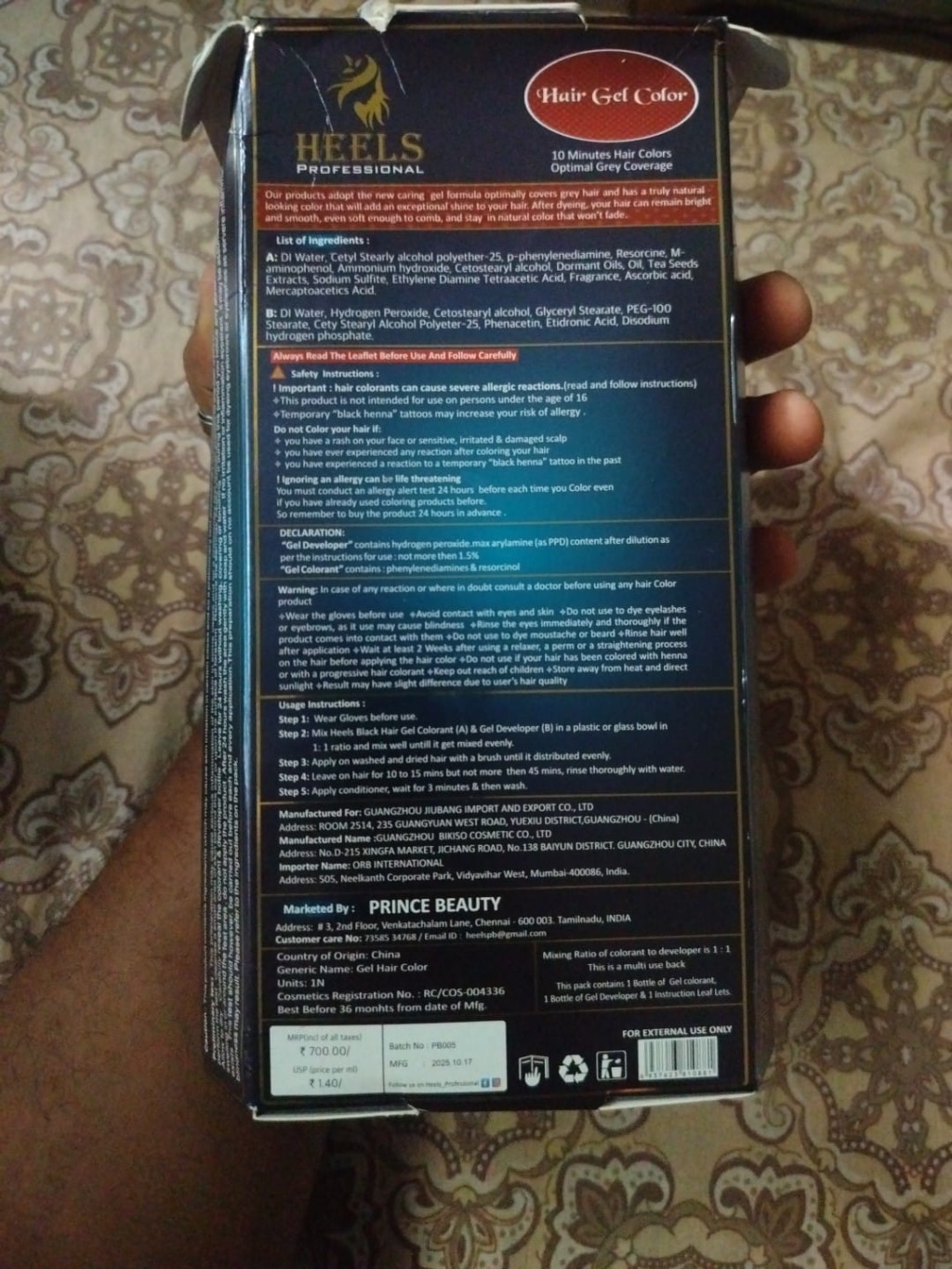
What is Heels Professional Hair Gel Color?
Heels Professional Hair Gel Color is a permanent hair dye product designed to provide lasting color changes. Marketed to individuals seeking to color their hair at home, it falls into the cosmetic category of rinse-off hair dyes. Unlike temporary or semi-permanent options, permanent hair colors typically utilize a chemical process involving an oxidizer and color precursors to penetrate the hair shaft, resulting in a durable color that doesn't wash out easily. This product aims to deliver vibrant color while also incorporating conditioning agents for hair health.
The ingredient breakdown
This hair gel color features a comprehensive ingredient list, totaling over twenty components. Its composition includes potent coloring agents, various conditioning emollients, and standard cosmetic stabilizers and pH adjusters. While some ingredients are beneficial for hair texture and health, the presence of strong chemical dyes and a generic fragrance listing warrants a closer look at its overall safety profile.
Coloring Agents and Developers
The primary active coloring agents in Heels Professional Hair Gel Color are p-phenylenediamine (PPD), Resorcinol, and M-aminophenol. PPD is a highly effective permanent hair dye but is also a potent skin sensitizer and a common cause of allergic contact dermatitis, especially for those with 'black henna' tattoo reactions. Regulatory bodies like the FDA mandate clear warning labels and patch test instructions due to its allergenic potential. Resorcinol acts as a color coupler, known as a skin irritant and a potential endocrine disruptor at high concentrations. M-aminophenol is another color precursor, generally a potential irritant. Ammonium hydroxide serves as an alkalizing agent, opening the hair cuticle, and can be irritating to skin and respiratory system.
Conditioning and Stabilizing Agents
To counteract the harshness of the coloring process, this product includes several beneficial conditioning and stabilizing ingredients. Cetyl Stearyl alcohol polyether-25, Cetostearyl alcohol, Glyceryl Stearate, and PEG-100 Stearate function as emollients and emulsifiers, helping to soften hair, prevent dryness, and ensure a smooth product texture. Natural extracts like Dormant Oils and Tea Seeds Extract are included for their conditioning properties, aiming to leave hair feeling nourished. Other components like Sodium Sulfite and Ascorbic acid act as antioxidants and preservatives, maintaining product stability, while Ethylene Diamine Tetraacetic Acid (EDTA) and Etidronic Acid are chelating agents that improve product performance by binding to metal ions.
Other Noteworthy Ingredients
The ingredient list also includes Fragrance, a generic term that can mask a blend of chemicals, some of which may be allergens or irritants. This lack of transparency is a common concern for sensitive individuals. Hydrogen Peroxide is a crucial developer in permanent hair dyes, acting as an oxidizing agent to activate color precursors. While essential, it can be irritating to the skin and eyes. Mercaptoacetic Acid is a reducing agent, assisting in the coloring process. Phenacetin, once a pain reliever, is now banned for internal use due to carcinogenicity; in hair dyes, its role as a stabilizer or color enhancer is less clear regarding safety in cosmetic applications.
What this means for your health
For most individuals, using Heels Professional Hair Gel Color as directed, particularly with strict adherence to the patch test protocol, may pose a moderate risk. The primary concern revolves around the potent sensitizers PPD and Resorcinol. These chemicals can trigger allergic contact dermatitis, which can range from mild irritation to severe skin reactions, especially in those predisposed to allergies or with a history of reactions to similar substances like 'black henna' tattoos. The FDA strongly advises against using hair dyes on eyelashes or eyebrows due to the risk of blindness, a warning explicitly stated for this product.
While this is a rinse-off product, direct skin contact during application is unavoidable. Pregnant individuals are often advised by healthcare professionals to exercise caution with permanent hair dyes, opting for alternatives or delaying use, although specific warnings for pregnancy are not provided in the product analysis. Children should not use this product. The generic "Fragrance" also presents a potential risk for individuals with fragrance sensitivities, who may experience irritation without knowing the specific allergens present. Always prioritize the patch test to assess your individual reaction before full application.
Safer alternatives to consider
For those concerned about the sensitizing agents and potential irritants in permanent hair dyes, several safer alternatives exist. Look for hair color products explicitly labeled "PPD-free" and "Resorcinol-free." Many brands now offer formulations that use alternative color precursors, which, while still chemical, may have a lower sensitization potential. Additionally, consider products that are fragrance-free to minimize exposure to undisclosed allergens. For a more natural approach, plant-based dyes like pure henna or indigo can offer color without the harsh chemicals, though they have different application processes and color results. Always scrutinize ingredient lists and opt for brands committed to transparency.
The bottom line
Heels Professional Hair Gel Color offers permanent hair coloring with the benefit of conditioning agents. However, the presence of potent sensitizers like p-phenylenediamine and Resorcinol means it carries a significant risk of allergic reactions for some users. While emollients aim to protect hair, the chemical dye system requires extreme caution. For the average reader, this product should be used only after a mandatory patch test, and individuals with known sensitivities or a history of 'black henna' reactions should strongly consider PPD-free alternatives to ensure their safety.