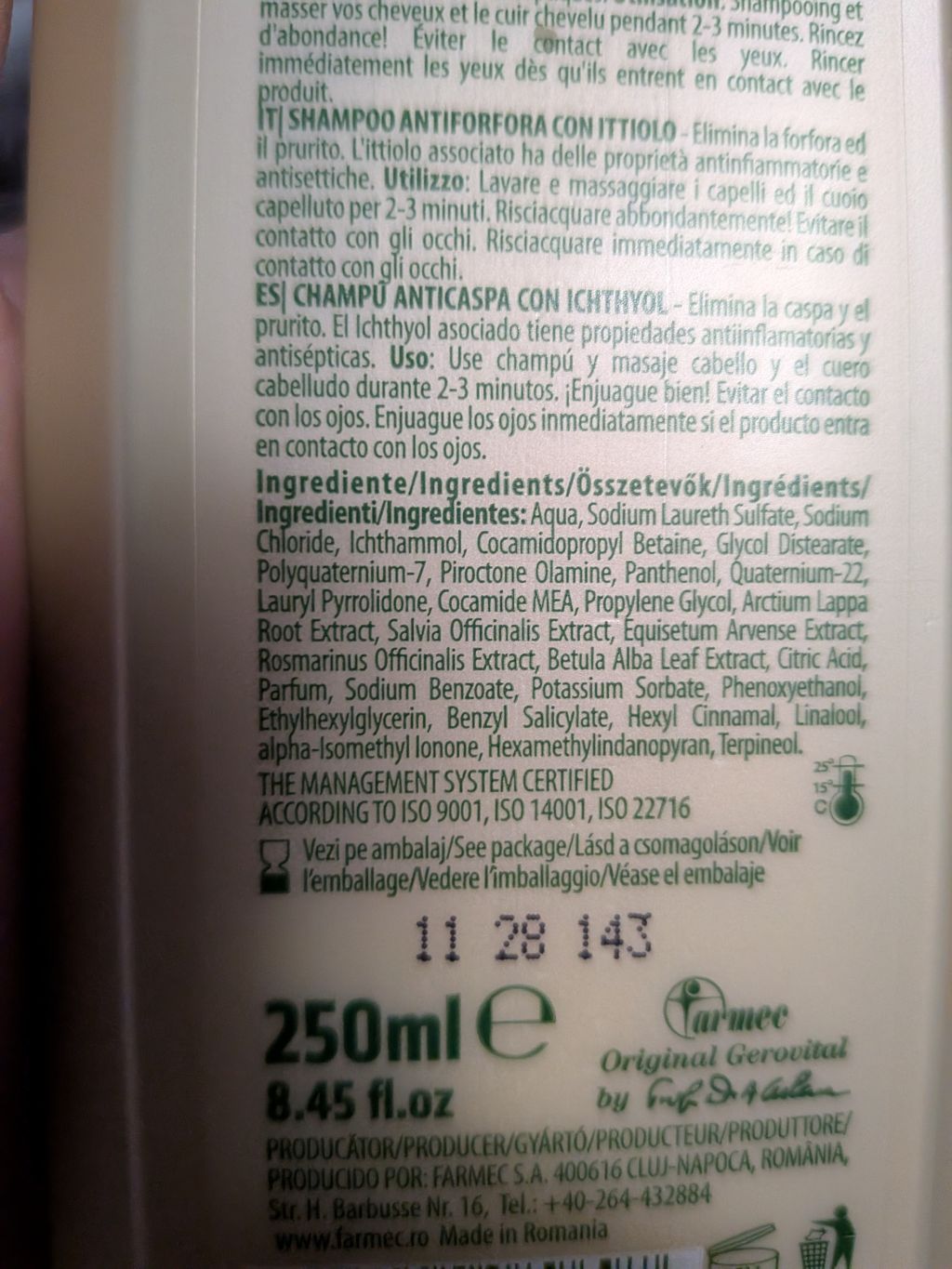
What is Gerovital Antidandruff Shampoo with Ichthyol?
Gerovital Antidandruff Shampoo with Ichthyol is a personal care product designed to address scalp conditions, particularly dandruff. Marketed to individuals experiencing flaking, itching, and irritation, this rinse-off shampoo falls into the therapeutic hair care category. Its primary active ingredient, Ichthyol, also known as Ichthammol, is traditionally used for its anti-inflammatory and antiseptic properties, aiming to soothe and normalize the scalp environment. Unlike some conventional shampoos, it focuses on specific scalp health benefits beyond basic cleansing, targeting the root causes of dandruff.
The ingredient breakdown
This shampoo features a blend of active therapeutic compounds, a variety of botanical extracts, and standard cleansing agents. While it incorporates several beneficial ingredients aimed at scalp health and hair conditioning, its profile also includes synthetic fragrances and common preservatives, which warrant a closer look for those with sensitivities.
The core of this shampoo's therapeutic action comes from Ichthammol (Ichthyol) and Piroctone Olamine. Ichthammol is recognized for its anti-inflammatory and antiseptic qualities, which can help reduce redness and inhibit the growth of microorganisms associated with dandruff. Piroctone Olamine is another well-established antifungal agent commonly used in anti-dandruff formulations to control the yeast Malassezia globosa, a primary contributor to dandruff. Additionally, Panthenol is included for its ability to condition hair and retain moisture, promoting overall hair and scalp health.
For cleansing, the shampoo primarily uses Sodium Laureth Sulfate (SLES). SLES is a common surfactant that creates lather and effectively cleanses hair. However, it is a concern for some consumers because the manufacturing process (ethoxylation) can lead to contamination with 1,4-dioxane, a byproduct classified by the International Agency for Research on Cancer (IARC) as a Group 2B possible human carcinogen. While the FDA monitors 1,4-dioxane levels, its presence, even in trace amounts, is a consideration. Other surfactants like Cocamidopropyl Betaine are also present, which are generally considered milder.
A notable aspect of this shampoo's formulation is the inclusion of Parfum (fragrance) and several specific fragrance allergens: Benzyl Salicylate, Hexyl Cinnamal, Linalool, and alpha-Isomethyl Ionone. 'Parfum' is an umbrella term that can represent a complex mixture of dozens of undisclosed chemicals. These specific compounds are known fragrance allergens, meaning they can trigger allergic reactions like contact dermatitis or skin sensitization in susceptible individuals. Due to their sensitization potential, the EU Cosmetic Regulation restricts the concentration of some of these allergens and requires their individual listing on product labels.
Regulatory standing and hidden ingredients
The term 'Parfum' in the ingredient list represents an opaque blend, meaning the specific chemical constituents that make up the fragrance are not individually disclosed. This legal loophole allows manufacturers to protect proprietary scent formulas, but it also means consumers are exposed to a potentially large number of chemicals without full transparency. These undisclosed mixtures can contain dozens of unlisted substances, some of which may be sensitizers or irritants. For instance, the specific fragrance allergens like Benzyl Salicylate, Hexyl Cinnamal, Linalool, and alpha-Isomethyl Ionone are listed separately due to EU regulations, highlighting their potential to cause skin sensitization.
What this means for your health
For the average consumer without known sensitivities, Gerovital Antidandruff Shampoo with Ichthyol is likely to be effective for its intended purpose of managing dandruff. The presence of Ichthammol and Piroctone Olamine offers targeted relief for scalp conditions, and the botanical extracts provide additional soothing benefits. As a rinse-off product, the contact time with the skin is limited, which generally reduces the systemic absorption of ingredients. However, direct contact with the scalp means that localized reactions, particularly to fragrance components, are a realistic concern.
Individuals with sensitive skin, a history of allergies, or known fragrance sensitivities should exercise caution. The multiple fragrance allergens (Benzyl Salicylate, Hexyl Cinnamal, Linalool, alpha-Isomethyl Ionone) present a medium risk for contact dermatitis or allergic reactions. Performing a patch test on a small area of skin before full use is advisable for these populations. While Sodium Laureth Sulfate (SLES) can be contaminated with 1,4-dioxane, the overall exposure risk from a rinse-off product is considered low, and regulatory bodies like the FDA monitor these levels to ensure they remain within safe limits.
Safer alternatives to consider
For those seeking alternatives with a cleaner ingredient profile, look for antidandruff shampoos that are explicitly labeled fragrance-free or unscented. These products avoid the opaque 'Parfum' blends and common fragrance allergens. Additionally, consider shampoos that utilize milder surfactants, such as those derived from coconut (e.g., coco-glucosides, decyl glucoside) instead of ethoxylated sulfates like SLES, to minimize potential exposure to 1,4-dioxane. Prioritize products with fully transparent ingredient lists, especially if you have known skin sensitivities or allergies.
The bottom line
Gerovital Antidandruff Shampoo with Ichthyol offers a targeted solution for dandruff and scalp irritation, leveraging beneficial ingredients like Ichthammol and Piroctone Olamine, alongside soothing botanicals. However, its reliance on synthetic fragrance, including several known allergens, and the presence of Sodium Laureth Sulfate, which carries a minor contamination risk, are notable drawbacks. For most users, it will likely be effective and well-tolerated. However, individuals with sensitive skin or fragrance allergies should proceed with caution and consider a patch test or explore fragrance-free alternatives to minimize potential adverse reactions.