What is Fleur de Lotus Deodorant?
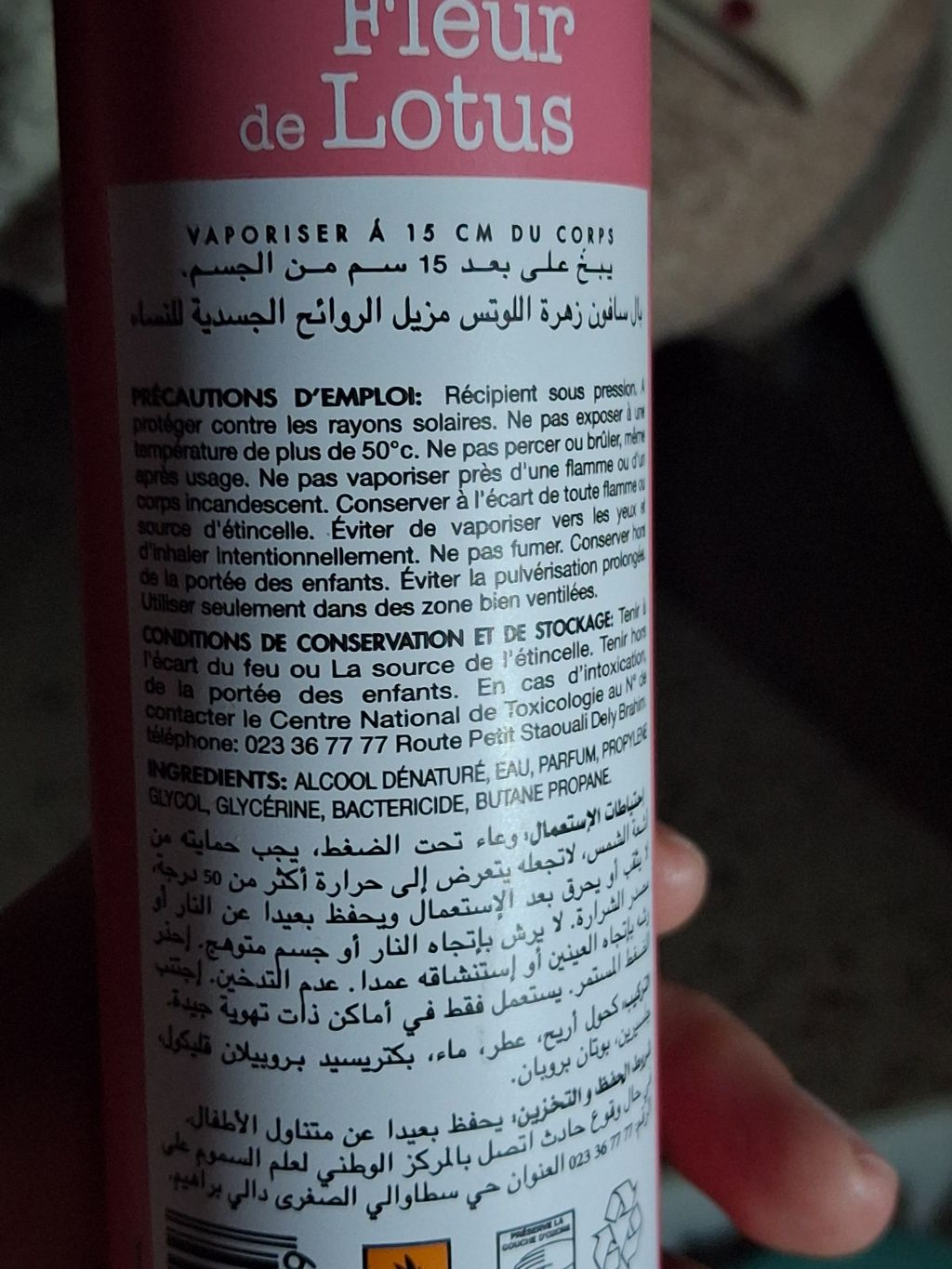
Fleur de Lotus Deodorant is a personal care product designed to control body odor, specifically an aerosol spray applied to the underarms. It is marketed as a daily-use item for general consumers seeking odor protection. As an aerosol, it disperses a fine mist, distinguishing it from roll-on or stick deodorants and antiperspirants, which aim to reduce sweat. This product focuses solely on deodorizing rather than blocking perspiration.
The ingredient breakdown
This deodorant features a relatively concise ingredient list, comprising approximately eight components. Its formulation includes a blend of propellants, solvents, a fragrance, and an antimicrobial agent, alongside water and a skin-conditioning ingredient. The overall profile suggests a product focused on immediate odor control and quick drying, with some notable considerations regarding its active components.
One primary area of concern is the inclusion of Parfum (fragrance) and a non-specific Bactericide. "Parfum" represents an undisclosed mixture of chemicals, often containing allergens that can trigger contact dermatitis, eczema, or respiratory sensitivities in susceptible individuals. Regulatory bodies like the EU require specific fragrance allergens to be listed if present above certain thresholds, but "Parfum" itself remains a black box. The "Bactericide" is intended to kill odor-causing bacteria but may indiscriminately disrupt the natural, beneficial microbiome of the underarm skin, potentially leading to imbalances or irritation over time.
The aerosol delivery system relies on propellant gases, specifically Butane and Propane. These liquefied petroleum gases are crucial for expelling the product from the can. While generally considered safe when used as directed in well-ventilated areas, intentional inhalation or use in poorly ventilated spaces can pose respiratory risks. Furthermore, both butane and propane are highly flammable, necessitating the "keep away from heat" warnings often found on aerosol products, a critical safety consideration for consumers.
Other notable ingredients include Alcool dénaturé (denatured alcohol) and Propylene glycol. Alcohol acts as a solvent and helps the product dry quickly, but it can be drying and potentially irritating to sensitive skin, especially when applied frequently. Propylene glycol, on the other hand, is a humectant and solvent generally recognized as safe by the FDA, helping to retain moisture and improve product texture. The formula also includes Glycerin, a well-known humectant that helps to condition the skin and counteract the drying effects of alcohol, offering a beneficial moisturizing element.
What this means for your health
For the average consumer, the primary health considerations with Fleur de Lotus Deodorant revolve around potential skin irritation and respiratory exposure. The presence of undisclosed fragrance (Parfum) is a common trigger for allergic contact dermatitis, manifesting as redness, itching, or rash, particularly for individuals with sensitive skin or pre-existing conditions like eczema. The denatured alcohol can also contribute to skin dryness and irritation with regular use. While the product is aluminum-free, which is a positive for those avoiding antiperspirants, the combination of fragrance and alcohol warrants caution.
The aerosol format introduces a unique set of concerns, particularly regarding inhalation. When sprayed, fine particles of the deodorant, including propellants like butane and propane, can be inhaled. While occasional, brief exposure in a well-ventilated area is generally not problematic, frequent or prolonged use in confined spaces could potentially irritate the respiratory tract, especially for individuals with asthma, allergies, or other respiratory sensitivities. The non-specific bactericide also raises questions about its long-term impact on the delicate underarm skin microbiome, which plays a role in skin health.
Safer alternatives to consider
For those seeking alternatives to aerosol deodorants like Fleur de Lotus, prioritizing products with simpler, transparent ingredient lists is key. Look for deodorants that are explicitly "fragrance-free" or "unscented" to avoid the hidden chemicals in "Parfum." Opting for roll-on, stick, or cream formulations can eliminate the inhalation risks associated with aerosol propellants. Additionally, consider products that avoid broad-spectrum "bactericides" to support a healthy skin microbiome. Ingredients like baking soda, magnesium hydroxide, or natural starches can offer odor control without harsh chemicals, and plant-based emollients can provide skin conditioning.
The bottom line
Fleur de Lotus Deodorant offers an aluminum-free option for odor control, featuring beneficial glycerin for skin conditioning. However, its use of undisclosed fragrance, a non-specific bactericide, and aerosol propellants presents moderate concerns. While generally safe for occasional use in well-ventilated areas, individuals with sensitive skin, respiratory issues, or those seeking to avoid potential microbiome disruption should exercise caution. For optimal safety, consider alternatives that are fragrance-free and non-aerosol.