
What is Unknown Supplement (Vitamin B Complex)?
The Unknown Supplement (Vitamin B Complex) is a dietary supplement designed to provide a comprehensive array of B vitamins. Marketed towards adults seeking to support energy metabolism, nerve function, and overall well-being, this product delivers several B vitamins in high potencies. It falls into the general wellness supplement category, often chosen by individuals looking to address potential dietary gaps or enhance specific physiological processes, though the specific target audience for such high doses is typically those with diagnosed deficiencies or specific medical needs.
The ingredient breakdown
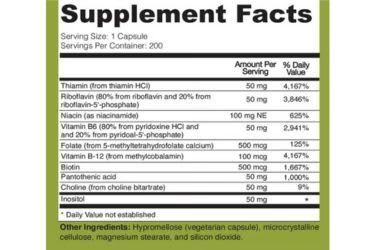
This B-complex supplement features a relatively focused ingredient list, primarily comprising the eight essential B vitamins along with a few common, inert excipients. While it boasts a high-quality approach to certain B vitamin forms, a notable characteristic is the significantly elevated dosage of several key B vitamins, which warrants closer examination for safety and necessity.
Among the most prominent ingredients are Vitamin B6 (Pyridoxal-5-Phosphate), Thiamin (Vitamin B1), and Riboflavin (Vitamin B2), each present at 50mg per capsule. While B vitamins are crucial for cellular metabolism, these dosages substantially exceed the recommended daily intake for healthy adults. For instance, the FDA's recommended daily allowance for Vitamin B6 is around 1.3-1.7mg. Prolonged intake of B6 at 50mg daily has been associated with sensory neuropathy, a condition affecting nerve function that can lead to numbness or tingling in the extremities. While Thiamin and Riboflavin are water-soluble and generally excreted when consumed in excess, 50mg is an unnecessarily high dose for most individuals and offers no additional benefit beyond much lower, adequate intakes.
On the positive side, this supplement utilizes highly bioavailable forms of critical B vitamins. It includes 5-methyltetrahydrofolate (5-MTHF) for folate, which is the active form readily usable by the body, bypassing the need for conversion that synthetic folic acid requires. Similarly, Vitamin B12 is provided as methylcobalamin, another active and well-absorbed form, superior to the more common cyanocobalamin. These choices reflect a commitment to ingredient quality that enhances the body's ability to utilize these nutrients effectively, which is a significant benefit for individuals with genetic variations that impair folate metabolism.
Other B vitamins present include Niacin, Biotin, Pantothenic acid, Choline, and Inositol, generally in moderate to safe dosages that support various bodily functions without significant concern. The capsule also contains standard inert fillers such as Hypromellose (for the capsule shell), Microcrystalline cellulose, Magnesium stearate, and Silicon dioxide. These excipients are widely used in the pharmaceutical and supplement industries and are considered safe for consumption, primarily serving to bind ingredients, prevent caking, or form the capsule itself.
What this means for your health
For most healthy adults, the extremely high doses of certain B vitamins in this supplement, particularly Vitamin B6, Thiamin, and Riboflavin, are likely unnecessary and could pose risks with prolonged use. The primary concern revolves around Vitamin B6, where consistent intake of 50mg can lead to peripheral neuropathy, a condition characterized by nerve damage. While the other high-dose B vitamins (B1, B2) are water-soluble and generally excreted, their megadose levels offer no additional health benefits beyond what adequate intake provides and may be a waste for the body to process.
Individuals who should be particularly cautious include those with pre-existing neurological conditions, pregnant or breastfeeding individuals, and anyone already taking other supplements or medications that might interact or contribute to B vitamin overload. It is crucial to consult a healthcare provider before starting any high-potency supplement, especially to determine if such elevated levels are genuinely needed for a specific deficiency or condition. For the average consumer, the realistic exposure risk for adverse effects like neuropathy from B6 increases with long-term, daily use of this product as intended.
Safer alternatives to consider
When seeking a B-complex supplement, safer alternatives would generally feature more moderate dosages of individual B vitamins, closer to the recommended daily allowances (RDAs) unless specifically prescribed by a healthcare professional for a diagnosed deficiency. Look for products that still prioritize bioavailable forms like methylcobalamin for B12 and 5-methyltetrahydrofolate for folate, but with Vitamin B6 doses typically below 10-25mg. Opt for supplements with minimal and well-understood excipients, and avoid those with proprietary blends that obscure individual ingredient amounts. A B-complex designed for general wellness should aim to supplement, not megadose, the body's needs.
The bottom line
The Unknown Supplement (Vitamin B Complex) offers a mixed profile. While it excels in using highly bioavailable forms of critical nutrients like B12 and folate, its significantly high dosages of B1, B2, and especially B6 present a potential concern for long-term use. For the average healthy individual, these megadoses are likely unnecessary and could lead to adverse effects, such as sensory neuropathy from prolonged B6 intake. Therefore, the average reader should approach this supplement with caution, ideally consulting a healthcare provider to assess individual need before regular use, or consider alternatives with more balanced, moderate potencies.