What is Unknown Perfume/Fragrance?
Unknown Perfume/Fragrance is a cosmetic product designed to impart a scent to the body. As a leave-on fragrance, it is intended to remain on the skin for extended periods, allowing its aromatic compounds to diffuse over time. This product falls into the broad category of personal care items, marketed to individuals seeking to enhance their personal scent. Unlike products with specific functional claims like sunscreens or moisturizers, perfumes primarily serve an aesthetic purpose, relying on a complex blend of volatile compounds to create a unique olfactory experience.
The ingredient breakdown
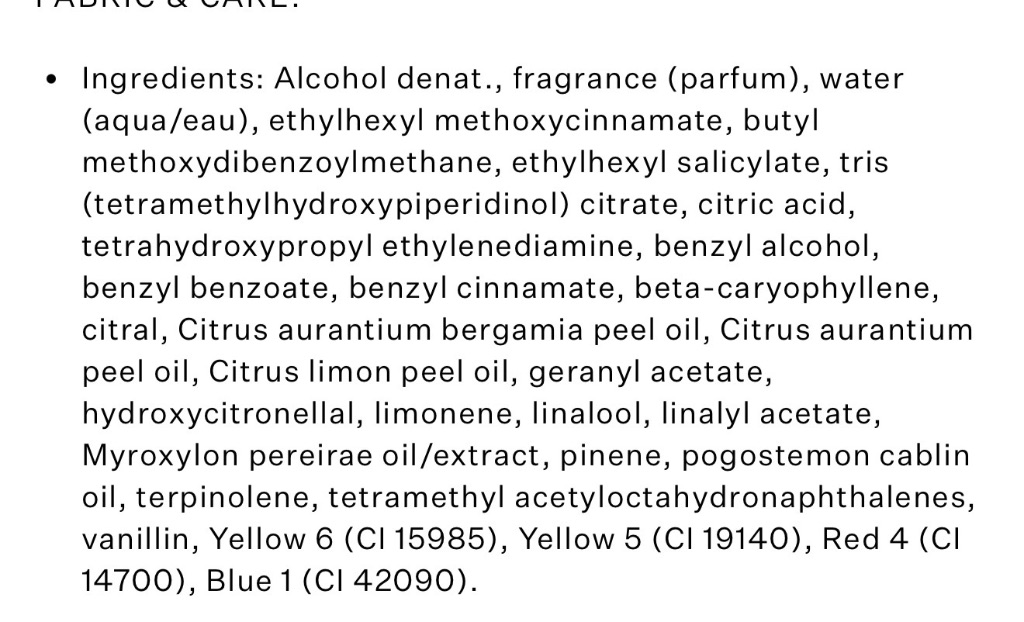
This fragrance product features a moderately complex ingredient profile, comprising a blend of synthetic and natural aromatic compounds, solvents, and stabilizers. While it includes some beneficial natural essential oils, a significant portion of its composition is dedicated to a proprietary 'fragrance' blend, raising questions about full transparency. The formulation also incorporates UV filters to maintain product integrity and several artificial colorants.
Fragrance Compounds and Potential Allergens
The most prominent ingredient, Fragrance (parfum), represents a proprietary mixture that can contain hundreds of undisclosed chemicals. This lack of transparency is a significant concern, as many common fragrance ingredients are known sensitizers. Within this blend, specific allergens are declared, including Limonene, Linalool, Citral, and Hydroxycitronellal. These compounds, along with Benzyl alcohol, Benzyl benzoate, Benzyl cinnamate, and Myroxylon pereirae oil/extract, are common fragrance allergens. Limonene and Linalool, for instance, are naturally occurring components of essential oils that can oxidize upon air exposure, forming potent skin sensitizers. While the FDA allows 'fragrance' as a trade secret in the U.S., the European Union mandates the disclosure of 26 common fragrance allergens when present above certain thresholds to protect consumers with sensitivities.
Solvents and Stabilizers
Alcohol denat. serves as the primary solvent, allowing the fragrance compounds to disperse and evaporate effectively. While essential for perfume formulation, high concentrations of denatured alcohol can be drying or irritating, particularly for individuals with sensitive skin. The product also contains several UV filters, such as Ethylhexyl methoxycinnamate, Butyl methoxydibenzoylmethane, and Ethylhexyl salicylate. These ingredients are included not to protect the skin from sun exposure, but rather to prevent the degradation of the fragrance compounds themselves, preserving the product's scent and color stability over time. Tris (tetramethylhydroxypiperidinol) citrate is another stabilizer, acting as an antioxidant to further protect the delicate aromatic molecules.
Colorants
To achieve its visual appeal, this fragrance incorporates several synthetic colorants, including Yellow 6 (CI 15985), Yellow 5 (CI 19140), Red 4 (CI 14700), and Blue 1 (CI 42090). While these are approved for cosmetic use by the FDA, some artificial dyes, particularly Yellow 5 and Yellow 6, have been linked to hyperactivity in sensitive children in European studies, leading to mandatory warning labels on food products containing them in the EU. For a leave-on cosmetic, the primary concern remains potential skin irritation or allergic reactions in susceptible individuals, though systemic absorption is generally minimal.
What this means for your health
For the average consumer, the primary health concern with Unknown Perfume/Fragrance revolves around skin sensitization and irritation. The presence of numerous known fragrance allergens like Limonene, Linalool, and Citral significantly increases the potential for contact dermatitis, especially with repeated use. Individuals with a history of eczema, sensitive skin, or fragrance allergies should exercise extreme caution or consider avoiding this product altogether. The high concentration of Alcohol denat. may also contribute to skin dryness or irritation for some users, particularly when applied to areas prone to sensitivity.
While this product does not contain common endocrine disruptors like parabens or phthalates, the broad 'fragrance (parfum)' declaration means the full chemical composition is not transparent. This lack of disclosure makes it challenging to assess potential long-term effects for vulnerable populations, such as pregnant individuals or young children, who may have heightened sensitivities or different absorption rates. For most healthy adults, using this product as intended (topical application) presents a moderate risk, primarily localized to the skin.
Safer alternatives to consider
Consumers seeking safer fragrance options should prioritize products with full ingredient transparency. Look for brands that disclose every component of their fragrance blend, rather than using the generic 'fragrance (parfum)' term. Opt for products labeled 'fragrance-free' if skin sensitivity is a concern, or choose those that utilize simpler essential oil blends where each oil is explicitly listed. Products with minimal or no artificial colorants are also preferable. Prioritizing formulations with fewer known allergens and irritants can significantly reduce the risk of adverse skin reactions.
The bottom line
Unknown Perfume/Fragrance presents a moderate safety profile, primarily due to its high potential for skin sensitization from numerous undisclosed and declared fragrance allergens. While it avoids some common endocrine disruptors and includes beneficial UV stabilizers for the product itself, the lack of full transparency regarding its 'fragrance' blend is a notable drawback. For individuals with sensitive skin or fragrance allergies, this product is best avoided. Others should proceed with caution, performing a patch test before regular use, and consider alternatives with more transparent ingredient lists.