
COSMETIC ANALYSIS

Unknown Perfume/Fragrance Product

AI-Powered Safety Report · SafeShelf

🌐 This is a public scan General scans are publicly accessible and may appear in search engines and the community Discover gallery. Do not upload labels containing personal information. If you want a private analysis tailored to your health, create a free account and use Personalised Scanning →
⚕️ Data Aggregation & Medical Disclaimer SafeShelf is a technology platform, not a medical provider. This analysis is generated by an AI system that aggregates public regulatory data (such as EU and FDA databases) and is provided for educational and informational purposes only. It is not medical advice, a clinical diagnosis, or a substitute for professional healthcare guidance. SafeShelf has no doctors on staff and cannot guarantee the accuracy of AI-generated assessments.

Do not make health, dietary, or medical decisions based solely on this report. Always consult a qualified healthcare professional — especially if you have a medical condition, are pregnant, take prescription medications, or are acting on behalf of an infant or child.

45
Moderate
Unknown Perfume/Fragrance Product
leave-on perfume high confidence

This product is a fragrance-based cosmetic containing a high concentration of volatile aromatic compounds and denatured alcohol. Due to the high number of potential fragrance allergens and the inclusion of undisclosed 'Parfum', users with sensitive skin or fragrance allergies should exercise caution.

📊 Score Breakdown
Endocrine Disruptors
30% of overall
80
No classic phthalates or parabens listed in the provided ingredients.
Carcinogens and Irritants
25% of overall
70
Contains multiple known sensitizing fragrance allergens that can act as skin irritants.
Fragrance Transparency
15% of overall
40
Listed as 'Parfum', which hides the proprietary blend of chemicals used for scent.
Surfactant Harshness
15% of overall
90
No harsh sulfates or DEA/TEA compounds detected in this base.
Active Ingredients
15% of overall
50
The product lacks functional skin-care actives, focusing exclusively on aromatic profile.
🚨 Critical Warnings
High fragrance load: Contains multiple EU-listed allergens including Limonene, Linalool, and Citral.
Alcohol content: Alcohol Denat. can be drying or irritating to sensitive skin.
🥜 Allergens Detected

These are personal risks — they are not universally harmful. People without these allergies or intolerances are unaffected.

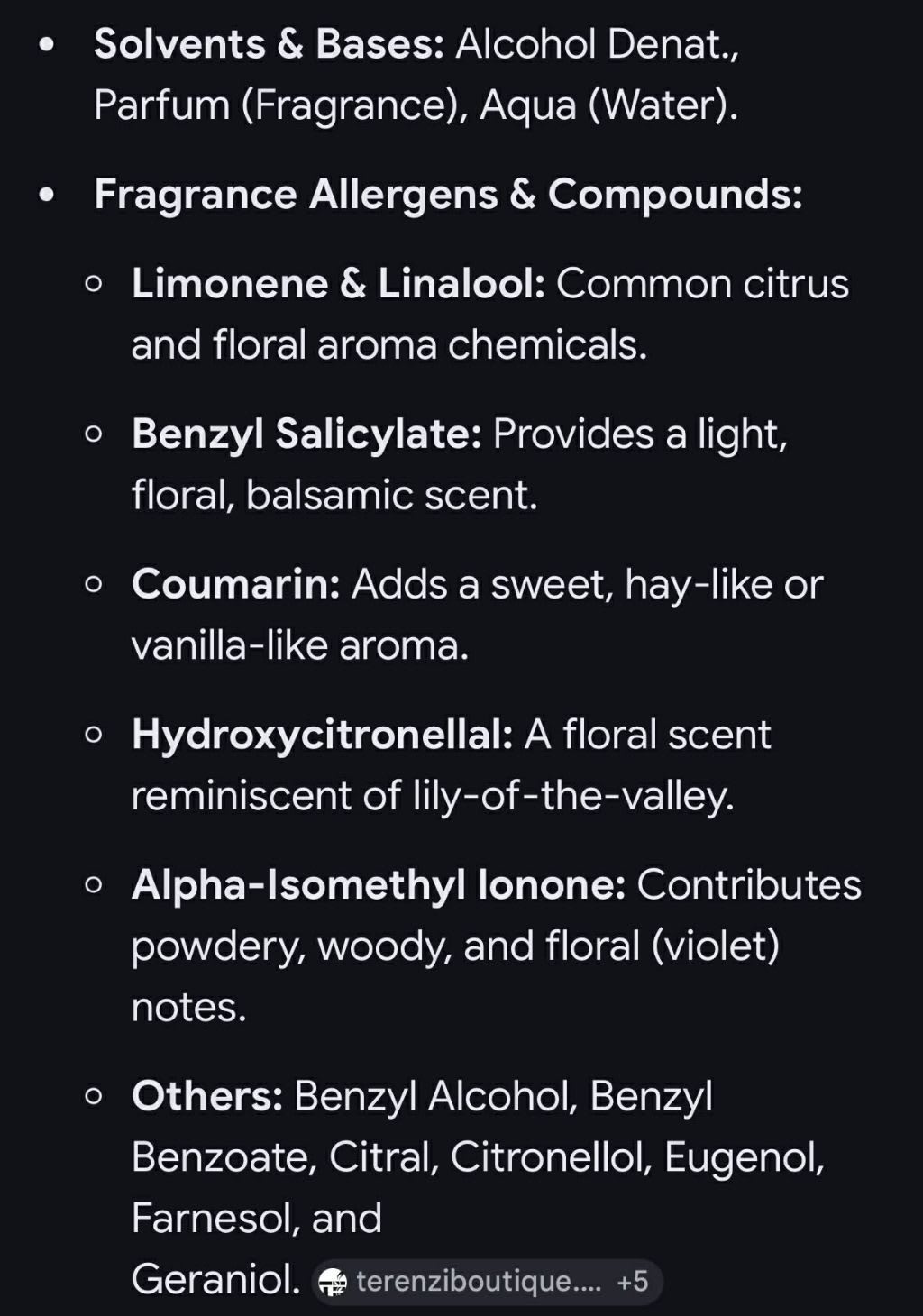
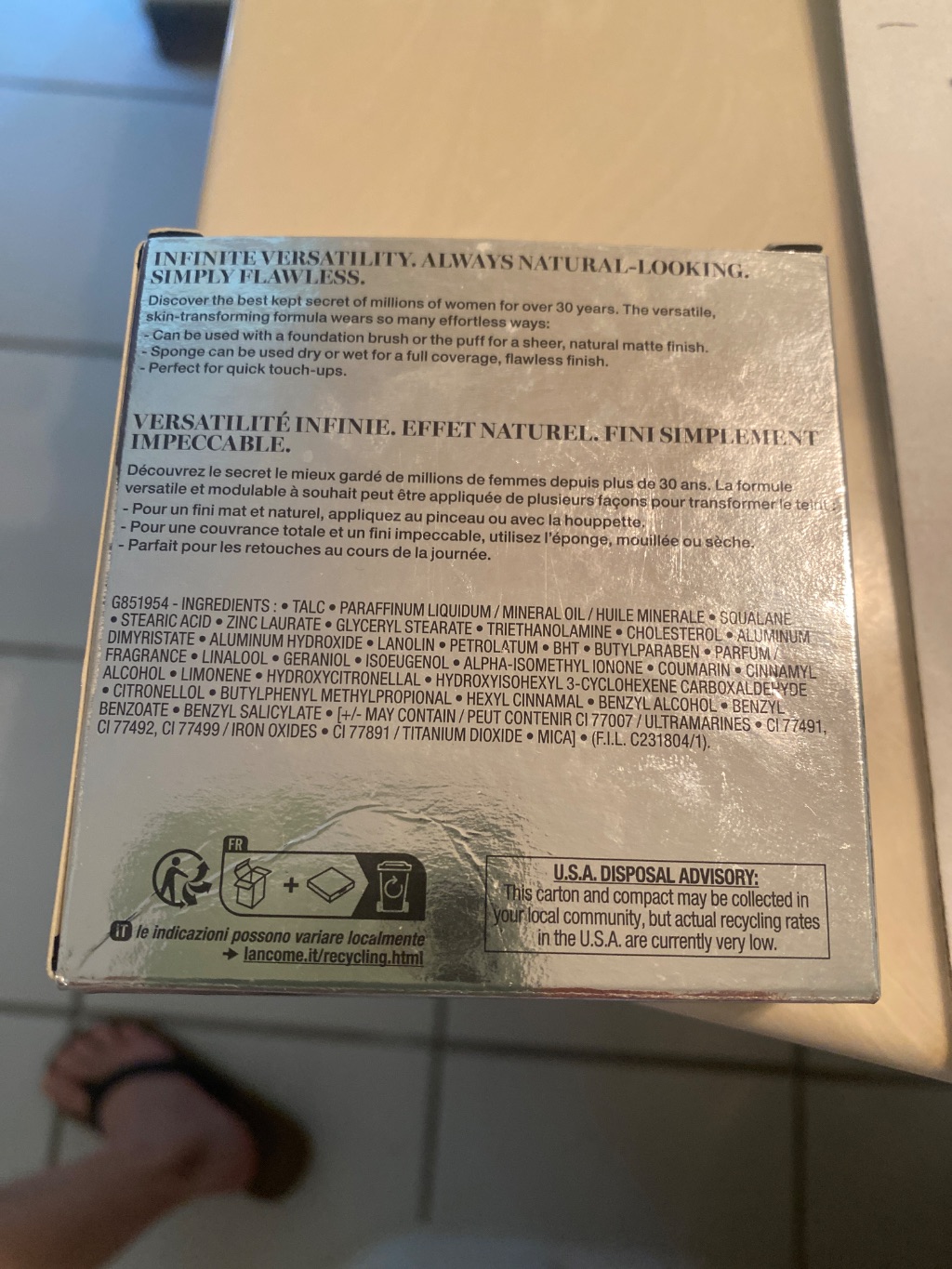
Limonene Linalool Benzyl Salicylate Coumarin Hydroxycitronellal Alpha-Isomethyl Ionone Benzyl Alcohol Benzyl Benzoate Citral Citronellol Eugenol Farnesol Geraniol
⚠️ Flagged Ingredients
Fragrance Allergens (Complex) MEDIUM
Contains a high number of known skin sensitizers that can cause contact dermatitis.
Alcohol Denat. LOW
Potential for skin dryness and irritation in leave-on formulations.
🔬 Full Ingredient Breakdown

Every identified ingredient classified by safety level.

Alcohol Denat. moderate
Parfum allergen
Aqua safe
Limonene allergen
Linalool allergen
Benzyl Salicylate allergen
Coumarin allergen
Hydroxycitronellal allergen
Alpha-Isomethyl Ionone allergen
Benzyl Alcohol allergen
Benzyl Benzoate allergen
Citral allergen
Citronellol allergen
Eugenol allergen
Farnesol allergen
Geraniol allergen
💡 Recommendations
  • Perform a patch test on the inner forearm before full application.
  • Avoid applying to broken or inflamed skin due to high alcohol and fragrance content.
📚 Regulatory & Toxicological Context

The analysis for Unknown Perfume/Fragrance Product relies on aggregated data from global regulatory bodies. When evaluating products in the cosmetic category, our AI cross-references ingredients against databases such as the European Chemicals Agency (ECHA), the US Food and Drug Administration (FDA) GRAS list, and the International Agency for Research on Cancer (IARC).

Consumer products often contain complex chemical formulations. While individual ingredients may be legally permitted in certain jurisdictions, emerging toxicological research frequently highlights the risks of bioaccumulation, endocrine disruption, and gut microbiome degradation. SafeShelf's mission is to provide transparent, accessible translations of these complex chemical nomenclatures so consumers can make informed decisions about their household exposure.

⚕️ Reminder: This AI report is for informational purposes only and does not replace professional medical advice. Ingredient safety can vary based on individual health factors, dosage, product formulation, and applicable regulations in your country. SafeShelf assumes no liability for decisions made based on this analysis.

🔍 Related Scans in this Category

What is Unknown Perfume/Fragrance Product?

This product is a leave-on cosmetic designed to impart a scent. It falls into the broad category of personal fragrances, often marketed to adults seeking a signature aroma for daily wear or special occasions. Unlike functional cosmetics such as moisturizers or sunscreens, its primary purpose is aesthetic, relying on a complex blend of aromatic compounds to create a desired olfactive experience. As a leave-on formulation, its ingredients remain on the skin for extended periods, making ingredient safety particularly relevant for consumers.

The ingredient breakdown

The Unknown Perfume/Fragrance Product features a relatively concise ingredient list, primarily composed of a denatured alcohol base and a complex "Parfum" blend. While it avoids common problematic additives like phthalates or harsh sulfates, its safety profile is largely defined by the high concentration and variety of fragrance components, many of which are known allergens.

The core of this product is its "Parfum" blend, which is a proprietary mix of aromatic chemicals. This blend includes numerous EU-listed fragrance allergens such as Limonene, Linalool, Benzyl Salicylate, Coumarin, Hydroxycitronellal, Alpha-Isomethyl Ionone, Benzyl Alcohol, Benzyl Benzoate, Citral, Citronellol, Eugenol, Farnesol, and Geraniol. These compounds are responsible for the product's scent but are also recognized by regulatory bodies like the European Union's Scientific Committee on Consumer Safety (SCCS) as potential skin sensitizers. When applied to the skin, these ingredients can trigger allergic contact dermatitis in susceptible individuals, manifesting as redness, itching, or rash. The FDA permits "fragrance" or "parfum" as a single ingredient on labels, allowing companies to protect trade secrets, but this lack of transparency can make it challenging for consumers with sensitivities to identify potential triggers.

The primary carrier for the fragrance compounds is Alcohol Denat. (denatured alcohol), along with Aqua (water). Alcohol Denat. serves as an effective solvent, helping to dissolve and disperse the fragrance oils, and also contributes to the quick evaporation and projection of the scent. While generally considered safe for topical application by regulatory bodies, high concentrations in leave-on products can be drying or irritating, especially for individuals with sensitive or compromised skin barriers. It works by dissolving the skin's natural lipids, which can lead to increased transepidermal water loss and potential irritation.

What this means for your health

For most individuals without known fragrance sensitivities, using the Unknown Perfume/Fragrance Product as intended may not pose significant immediate health risks. However, the high concentration of known fragrance allergens means that individuals with sensitive skin, a history of eczema, or pre-existing allergies are at a heightened risk of developing contact dermatitis. The repeated exposure to multiple sensitizers like Limonene and Linalool can lead to sensitization over time, even if initial use causes no reaction.

Pregnant individuals and parents considering this product for children should exercise particular caution. While there's no direct evidence of systemic toxicity from typical fragrance use, avoiding unnecessary chemical exposure is often recommended during pregnancy. For children, whose skin barriers are still developing and often more sensitive, minimizing exposure to potential irritants and allergens is prudent. The drying effect of Alcohol Denat. could also exacerbate existing dry skin conditions.

Safer alternatives to consider

When seeking a safer alternative in the fragrance category, prioritize products that offer full ingredient transparency, ideally listing all aromatic components rather than a generic "Parfum." Opt for "fragrance-free" or "hypoallergenic" formulations, though it's important to note that "fragrance-free" doesn't always mean free of all scent chemicals, only added fragrance. Look for products that explicitly state they are free of common EU-listed allergens. Alternatively, consider natural essential oil-based fragrances, but be aware that many essential oils also contain potent allergens, so patch testing and careful review of specific oil components are still crucial.

The bottom line

The Unknown Perfume/Fragrance Product offers an aromatic experience but comes with notable concerns regarding its high concentration of undisclosed and disclosed fragrance allergens. While it avoids some of the more severe chemical classes, the potential for skin sensitization and irritation, particularly for those with sensitive skin, is significant. For the average consumer, it's a product to approach with caution, especially if you have a history of skin reactions. Those with sensitive skin or who prefer full ingredient transparency should likely avoid it and seek out truly fragrance-free or fully transparent alternatives.

❓ Frequently Asked Questions
Is Unknown Perfume/Fragrance Product safe for sensitive skin?

This product contains a high concentration of known fragrance allergens like Limonene and Linalool, along with denatured alcohol. These ingredients can cause irritation or allergic reactions such as contact dermatitis in individuals with sensitive skin or pre-existing allergies. Patch testing is highly recommended, or consider fragrance-free alternatives.

What are the main concerning ingredients in Unknown Perfume/Fragrance Product?

The primary concerns are the "Parfum" blend, which includes numerous EU-listed fragrance allergens (e.g., Benzyl Salicylate, Coumarin, Citral), and Alcohol Denat. The undisclosed nature of "Parfum" makes it difficult to assess fully, while the alcohol can be drying and irritating to the skin.

Can Unknown Perfume/Fragrance Product cause allergic reactions?

Yes, this product contains multiple ingredients known to be common skin sensitizers and allergens, including Limonene, Linalool, and Benzyl Salicylate. These can trigger allergic contact dermatitis, leading to symptoms like redness, itching, or rash, especially with repeated use or in individuals predisposed to allergies.

The editorial article above was AI-generated from this product's ingredient analysis. It is for informational purposes only and is not medical advice.

Get a Personalised Analysis

Register free and scans will be tailored to your medications, conditions, and health goals.

Register Free →