
What is Unknown Brand Kajal?
Unknown Brand Kajal is a cosmetic product designed for defining the eyes, similar to an eyeliner or kohl. It is typically marketed to individuals seeking to enhance their eye makeup with a dark, smudgeable line. As a kajal, it falls into the category of eye cosmetics, which are often applied directly to the waterline and lash line, areas that can be sensitive. This particular formulation aims to provide smooth application and wear, incorporating a blend of synthetic waxes, silicones, and botanical extracts.
The ingredient breakdown
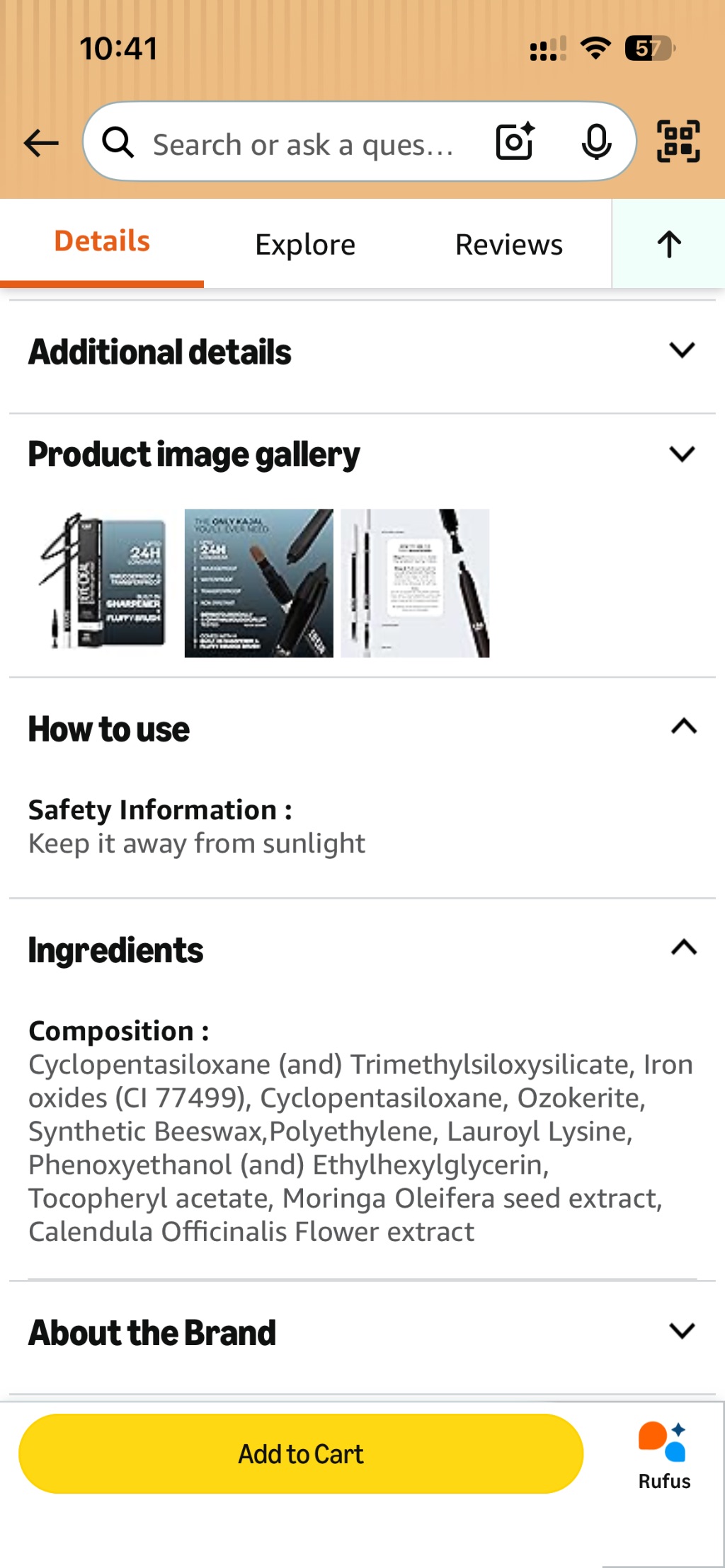
This kajal features a moderately complex ingredient profile, combining a base of synthetic waxes and silicones for structure and smooth application with several beneficial plant-derived extracts. While it wisely avoids added fragrances, a notable component is cyclopentasiloxane, a silicone compound that has drawn regulatory attention in some regions.
Silicones and Waxes for Performance
The core of this kajal's texture and application comes from a blend of silicones and waxes. Cyclopentasiloxane, a cyclic silicone, is included for its ability to create a smooth, non-greasy feel and help the product glide on easily. However, it is subject to restrictions in leave-on products within the European Union due to concerns about its environmental persistence and potential for bioaccumulation in aquatic environments, as regulated by REACH. While direct human health impacts from cosmetic use are generally considered low by many regulatory bodies, its environmental profile is a point of caution. Other silicones like Trimethylsiloxysilicate contribute to the product's long-wearing properties, forming a film on the skin. Waxes such as Ozokerite, Synthetic Beeswax, and Polyethylene provide structure and consistency, ensuring the kajal maintains its shape and applies evenly. Lauroyl Lysine, an amino acid derivative, acts as a skin conditioning agent, helping to improve the feel of the product on the skin.
Beneficial Botanical Extracts and Antioxidants
Beyond its structural components, this kajal incorporates several ingredients known for their skin-benefiting properties. Moringa Oleifera seed extract and Calendula Officinalis flower extract are included for their potential conditioning and soothing effects, respectively. Moringa is often valued for its antioxidant properties, while Calendula is well-regarded in skincare for its anti-inflammatory and calming attributes, which can be particularly beneficial in an eye product. Additionally, Tocopheryl acetate, a form of Vitamin E, is present as an antioxidant, helping to protect the formula from degradation and offering some skin-conditioning benefits.
Preservatives and Colorants
To ensure product stability and safety against microbial growth, this kajal contains the preservative system of Phenoxyethanol and Ethylhexylglycerin. Phenoxyethanol is a widely used preservative deemed safe by regulatory bodies like the FDA and the EU at concentrations up to 1%, effectively preventing bacterial contamination. Ethylhexylglycerin often works synergistically with phenoxyethanol, enhancing its efficacy. The product's dark color is achieved through Iron oxides (CI 77499), which are mineral-derived pigments considered safe for cosmetic use, including in eye products, by global regulatory agencies.
What this means for your health
For the average consumer, Unknown Brand Kajal is generally well-formulated, especially given its absence of added fragrance, a common irritant. The primary ingredient of concern, Cyclopentasiloxane, is largely an environmental issue at typical cosmetic concentrations, though some individuals prefer to avoid it due to its classification as a potential endocrine disruptor, even if the risk from cosmetic application is considered low by many authorities. Those with sensitive skin around the eyes may appreciate the inclusion of soothing botanical extracts and the lack of fragrance, which often triggers irritation.
However, individuals who are particularly environmentally conscious or those seeking to minimize exposure to ingredients with any level of endocrine disruption concern might choose alternatives. Pregnant individuals or those with specific health conditions should always consult with a healthcare professional regarding cosmetic ingredient safety. For most users, the realistic exposure risk from this product, when used as intended on the eyes, is low, with the main caveat being the environmental impact of one of its key silicones.
Safer alternatives to consider
When seeking a safer kajal or eyeliner, look for products that prioritize simpler formulations. Opt for those that explicitly state they are free of cyclic silicones like cyclopentasiloxane (D5) and cyclohexasiloxane (D6). Instead, consider products that rely on natural waxes, plant-based oils, and mineral pigments. Fragrance-free options are always preferable for eye products to minimize irritation. Brands that offer full ingredient transparency and third-party certifications for environmental impact or ingredient purity can also provide additional assurance.
The bottom line
Unknown Brand Kajal offers a generally well-rounded formulation, benefiting from soothing botanical extracts and a fragrance-free profile. Its main drawback is the inclusion of cyclopentasiloxane, an ingredient with environmental persistence concerns and some regulatory scrutiny in the EU. For most consumers, this kajal presents a low direct health risk, but those prioritizing environmental impact or avoiding all potential endocrine disruptors may wish to explore alternatives. It's a decent option, but with a notable caveat for the environmentally conscious.