What is Exfoliating Cream/Scrub?
This product is an exfoliating cream designed to remove dead skin cells and promote skin renewal. Exfoliants typically fall into two categories: physical, which use abrasive particles, and chemical, which use acids to dissolve bonds between cells. This particular formulation appears to combine both approaches, aiming to improve skin texture and brightness. It is generally marketed to individuals seeking smoother, more radiant skin and is applied topically to the face or body.
The ingredient breakdown
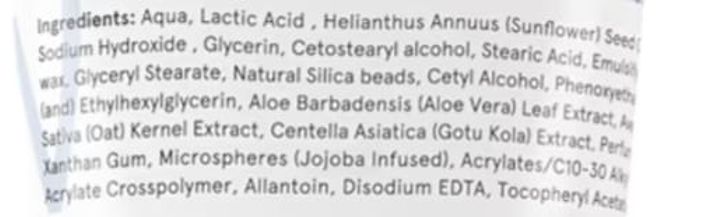
This exfoliating cream features a moderately complex ingredient list, combining both chemical and physical exfoliants with a range of emollients, humectants, and soothing botanical extracts. While many ingredients are beneficial for skin health, the inclusion of a generic "Perfume" listing warrants closer examination for potential sensitivities.
The primary active exfoliant in this product is Lactic Acid, an alpha hydroxy acid (AHA) known for its ability to chemically loosen dead skin cells and improve skin texture. It also functions as a humectant, drawing moisture into the skin. Alongside this, the product incorporates physical exfoliants like Helianthus Annuus (Sunflower) Seed and Natural Silica beads, which provide gentle mechanical exfoliation. While effective, the use of Lactic Acid means users must be diligent about sun protection, as AHAs can increase skin's sensitivity to UV radiation, a warning echoed by regulatory bodies like the FDA regarding AHA-containing products.
For hydration and skin conditioning, this cream includes beneficial ingredients such as Glycerin, a well-known humectant, and fatty alcohols like Cetostearyl alcohol and Cetyl Alcohol, which help to soften and smooth the skin without causing irritation. Emollients like Glyceryl Stearate and Stearic Acid further contribute to the product's moisturizing properties, helping to maintain the skin's barrier function. These ingredients are widely recognized as safe and beneficial in cosmetic formulations by bodies such as the Cosmetic Ingredient Review (CIR) Expert Panel.
Preservation is handled by Phenoxyethanol, a common cosmetic preservative. While generally considered safe in concentrations up to 1% by the European Scientific Committee on Consumer Safety (SCCS) and the FDA, some individuals with highly sensitive skin may experience mild irritation. The most notable concern, however, is the inclusion of "Perfume." This generic term allows manufacturers to hide specific fragrance chemicals, some of which are known allergens or irritants. For instance, the European Union requires specific fragrance allergens to be listed if present above certain thresholds, a level of transparency not afforded by a simple "Perfume" label.
The formulation also boasts several soothing and beneficial botanical extracts, including Aloe Barbadensis (Aloe Vera) Leaf Extract, Avena Sativa (Oat) Kernel Extract, and Centella Asiatica (Gotu Kola) Extract. These ingredients are well-regarded for their anti-inflammatory and skin-calming properties, helping to mitigate potential irritation from exfoliation. Allantoin and Tocopheryl Acetate (Vitamin E) further enhance the product's skin-conditioning and antioxidant benefits.
What this means for your health
For the average consumer, using this exfoliating cream as directed presents a moderate risk profile. The primary health consideration stems from the Lactic Acid content, which significantly increases skin's susceptibility to sun damage. Regular and diligent use of a broad-spectrum sunscreen is absolutely critical when incorporating this product into a skincare routine to prevent sunburn and long-term UV-induced damage. Failure to do so could negate the benefits and potentially harm skin health.
Another area of caution is the "Perfume" ingredient. Individuals with sensitive skin, eczema, or known fragrance allergies may experience irritation, redness, or allergic contact dermatitis. Since the specific components of "Perfume" are undisclosed, it's impossible to identify potential triggers without patch testing. While the product includes soothing extracts, these may not fully counteract a strong allergic reaction to an unknown fragrance component. Pregnant individuals or those with compromised skin barriers might consider avoiding products with generic fragrance listings to minimize potential exposure to irritants.
Safer alternatives to consider
When seeking a safer exfoliating product, prioritize formulations that clearly list all ingredients, especially fragrances. Look for products that are explicitly labeled "fragrance-free" or "unscented," as these are less likely to contain undisclosed allergens. For chemical exfoliants, consider those with well-studied AHAs or BHAs (like salicylic acid) at appropriate concentrations, always paired with clear instructions on sun protection. For physical exfoliation, opt for finely milled, biodegradable particles rather than harsh scrubs, and ensure the product also contains a robust blend of soothing and hydrating ingredients to support the skin barrier.
The bottom line
This exfoliating cream offers an effective blend of chemical and physical exfoliants, supported by beneficial hydrating and soothing ingredients. Its strengths lie in its multi-pronged approach to skin renewal and its inclusion of skin-calming botanicals. However, the generic "Perfume" listing introduces an element of uncertainty for those with sensitivities, and the Lactic Acid necessitates strict sun protection. For the average reader without fragrance sensitivities, this product can be used effectively with diligent sunscreen application. Those with sensitive or reactive skin may want to explore fragrance-free alternatives.