What is Nivea Deodorant Aerosol?
Nivea Deodorant Aerosol is a personal care product designed to combat body odor and, in some formulations, reduce perspiration. Marketed to a broad adult audience, this product falls into the antiperspirant/deodorant category, specifically utilizing an aerosol spray format for application. Its primary function is to deliver active ingredients that either mask odor or block sweat glands, providing a feeling of freshness and dryness throughout the day. As an aerosol, it relies on propellants to deliver a fine mist of product to the underarm area.
The ingredient breakdown
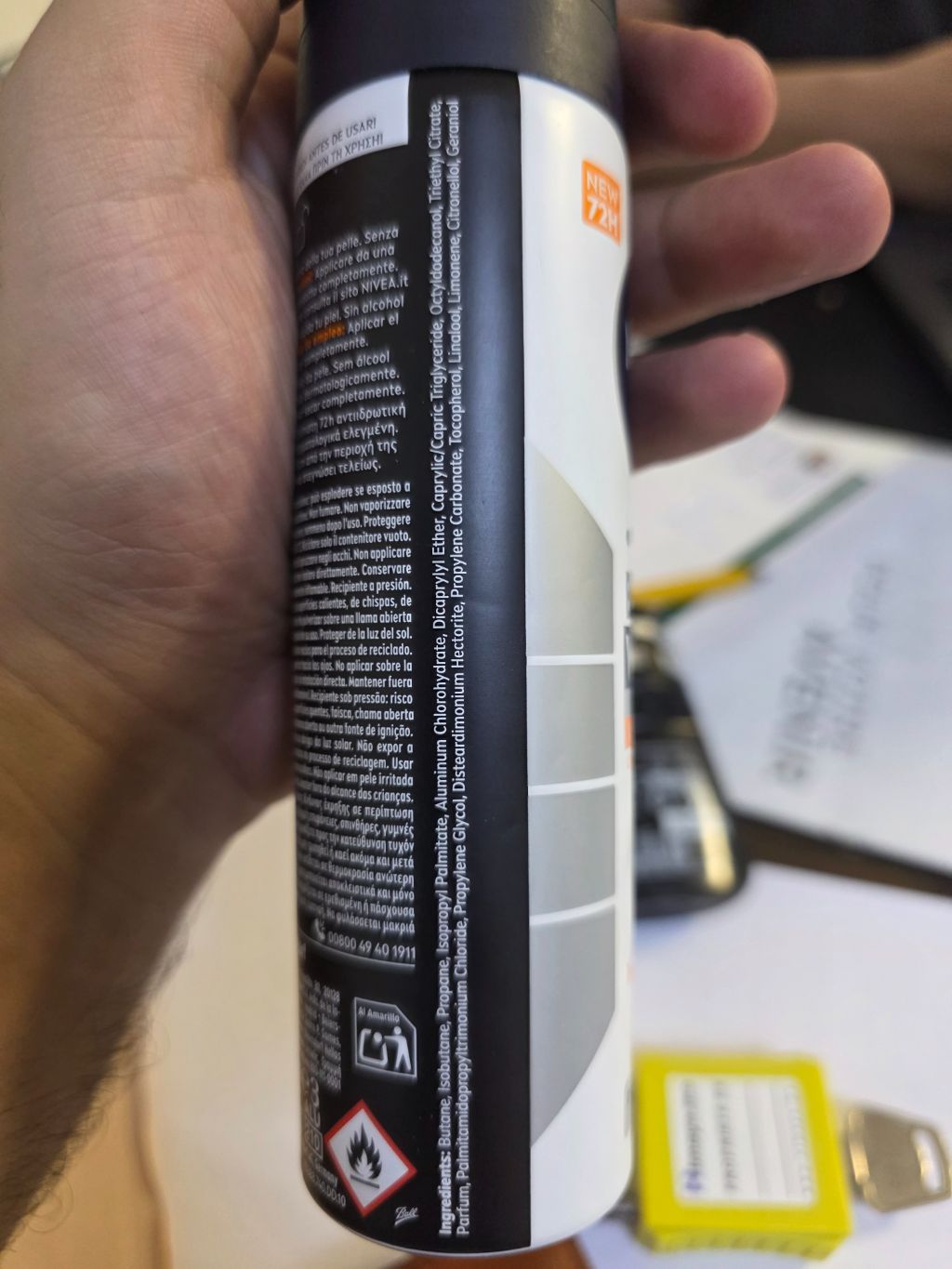
Nivea Deodorant Aerosol features a moderately complex ingredient profile, typical for an aerosol antiperspirant. It combines several propellant gases with an aluminum-based active ingredient, various skin conditioning agents, and a significant fragrance blend. Notably, it avoids controversial ingredients like parabens and triclosan, which is a positive aspect for many consumers.
The product's aerosol delivery system relies on a blend of **Butane, Isobutane, and Propane**. These hydrocarbon gases act as propellants, allowing the product to be dispensed as a fine spray. While generally considered safe for their intended use in cosmetics by regulatory bodies like the FDA, their aerosol nature means they should be used in well-ventilated areas to avoid inhalation, and they are highly flammable, requiring careful handling away from heat sources.
A key active ingredient in many Nivea aerosol deodorants is **Aluminum Chlorohydrate**. This compound functions as an antiperspirant by forming a temporary plug in the sweat ducts, thereby reducing the amount of sweat released to the skin's surface. While effective, some individuals may experience skin irritation or sensitivity. Concerns about aluminum absorption and its potential long-term health effects have been raised, though major regulatory bodies like the FDA and EFSA generally consider aluminum compounds safe for use in antiperspirants at approved concentrations, citing insufficient evidence to establish a direct causal link to serious health conditions in humans from cosmetic use.
The product also contains a significant **Parfum** (fragrance) blend, which is a generic term for a proprietary mix of scent chemicals. Within this blend, specific known allergens like **Linalool, Limonene, Citronellol, and Geraniol** are present. These compounds contribute to the product's scent but are recognized as common contact allergens and sensitizers. For instance, the European Union requires these specific fragrance allergens to be listed on product labels when they exceed certain concentrations, to inform consumers with sensitivities. Regular exposure to these can lead to allergic reactions such as redness, itching, or dermatitis in susceptible individuals.
Other ingredients include skin conditioning agents like **Tocopherol** (Vitamin E), known for its antioxidant properties, and **Glycerin**, a humectant that helps retain skin moisture. **Dicaprylyl Ether, Caprylic/Capric Triglyceride, and Octyldodecanol** are emollients that help soften and smooth the skin. **Triethyl Citrate** acts as an odor inhibitor, while **Palmitamidopropyltrimonium Chloride, Propylene Glycol, Disteardimonium Hectorite, and Propylene Carbonate** serve various roles as emulsifiers, solvents, and stabilizers, generally considered safe for topical application.
What this means for your health
For most individuals, using Nivea Deodorant Aerosol as directed is unlikely to pose significant health risks. The primary concerns revolve around potential skin sensitivities and the nature of aerosol application. Individuals with sensitive skin or known allergies to fragrance components should exercise caution, as the presence of multiple fragrance allergens like Linalool and Limonene can trigger contact dermatitis. It's advisable for these individuals to perform a patch test or opt for fragrance-free alternatives.
The aerosol format also presents considerations. While the propellants themselves are generally safe, inhaling the fine mist, especially in poorly ventilated spaces, is not recommended and can potentially irritate respiratory passages. The product's flammability due to these propellants also necessitates careful storage and use away from open flames. The debate around aluminum absorption from antiperspirants continues, but current scientific consensus from bodies like the FDA suggests that the amount absorbed is minimal and not directly linked to serious health conditions for the average consumer.
Safer alternatives to consider
For those looking for alternatives, consider products that prioritize simpler ingredient lists and different delivery methods. Look for deodorants or antiperspirants that are explicitly labeled fragrance-free to avoid potential allergens like Linalool and Limonene. If aluminum is a concern, opt for aluminum-free deodorants that use ingredients like baking soda, magnesium hydroxide, or zinc ricinoleate to neutralize odor. Stick or roll-on formats can also reduce the inhalation risk associated with aerosol sprays, providing a more targeted application without propellants.
The bottom line
Nivea Deodorant Aerosol offers effective odor and sweat protection for many, benefiting from the inclusion of skin conditioners like Vitamin E and being free from parabens. However, its use of aluminum chlorohydrate and a complex synthetic fragrance blend, including known allergens, warrants consideration for those with sensitivities or concerns about aluminum exposure. The aerosol format also requires mindful use in well-ventilated areas. For the average consumer without specific sensitivities, it can be used with awareness, but individuals with sensitive skin or those preferring to avoid aluminum and synthetic fragrances may find safer alternatives more suitable.